A football helmet still looks perfectly serviceable long after it has stopped being certified. The useful question is therefore not whether it looks good, but whether its certification still stands. What follows is what NOCSAE and the manufacturers publish, and nothing else: AFG has run no tests of its own.
Contents · 9 parts
The 2-minute summary
- Two years is the line: NOCSAE states that a helmet older than two years should be reconditioned and recertified to the NOCSAE standard.
- The clock runs even in storage: the frequency is set by years elapsed since the last recertification, not by how much the helmet was used.
- Nothing is automatic: once the manufacturer's interval passes, the existing certification expires, and only recertification renews it.
- Ten years: that limit comes from NAERA, the American reconditioners' association, and from manufacturers; NOCSAE says plainly it is not a NOCSAE requirement.
- Stop using it immediately: NOCSAE says never to use a helmet that is cracked or has missing padding or fitting pieces.
- Modify it and you de-certify it: an accessory attached to the shell creates an untested model whose SEI certification can be declared void.
Reconditioning and recertification are two different jobs
The two words get used interchangeably, wrongly so. In their joint document, NOCSAE and NAERA define them separately. Reconditioning is the inspection, cleaning, sanitising and repair or restoration of equipment to its original performance standard. Recertification is the retesting of previously certified equipment to confirm it still meets the original requirements of the NOCSAE standard, updated labelling included.
The two come as a pair. NOCSAE specifies that recertification testing must happen as part of a reconditioning process, because the randomly selected sample helmets have to be tested both before and after the work. Two standards govern it: ND004 for recertified football helmets and ND087 for facemasks. NOCSAE also points out that it is the only standards organisation publishing an equipment recertification standard, and that the workshops allowed to do the job are the members of NAERA, which it licenses without running the association.
If this vocabulary is new to you, start with our guide on how to choose a helmet, which covers NOCSAE certification itself, then come back here for the rest of the helmet's life. Our catalogue of football helmets lists the certification of each model.
Every two years, at the very least
In its fact sheet for players, parents and coaches, NOCSAE is blunt: a helmet older than two years should be reconditioned and recertified to the NOCSAE standard. Two rules drive that rhythm:
- frequency is counted in years elapsed since the last recertification, not in use, so a helmet that sat in a cupboard all season may still be due;
- if a certified helmet is not recertified within the interval set by the manufacturer, the existing certification expires. It is not lost for good: recertification renews it.
Riddell writes that interval into its warranty. The brand recommends annual reconditioning by a workshop it authorises, and treats proper maintenance as requiring a visit at least every two years to a NOCSAE Licensed Reconditioner, using only new factory replacement liners where a change is needed. Missing that deadline voids the shell warranty, which otherwise runs five years for polycarbonate varsity shells and three years for ABS youth shells; component parts carry a one-year warranty. That split mirrors the catalogue's own division between adult helmets and youth helmets.
One more NOCSAE note: for helmets manufactured before January 2017, it recommends annual recertification before use.
What the licensed workshop actually does
The route described by NOCSAE and NAERA runs to six steps: ship when the season ends, test a first sample of helmets, visually inspect every helmet, recondition, repair and clean, retest the same samples, then recertify and label. The randomly drawn sample therefore goes through two rounds of the NOCSAE drop test, before and after the work.
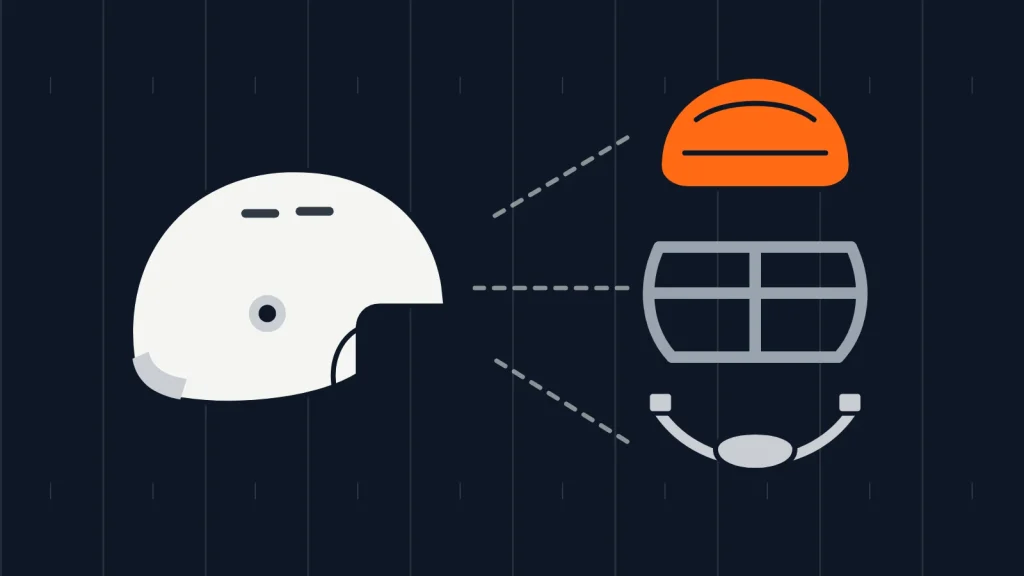
Three figures give the scale of it. NAERA members recondition and recertify more than 1.4 million football helmets a year, the process takes six or more weeks on average, and Riddell quotes roughly six to eight weeks excluding shipping for an individual order. Before posting a helmet, the brand asks owners to remove the chin strap (SpeedFlex models excepted, where it stays on), the mouthguard and the eye shield, and to leave every other component in place, internal liners and padding included. The Riddell SpeedFlex is the exception on that one point.
On the way out, each helmet gets a dated recertification label carrying the name of the NAERA facility and the year. NOCSAE adds that a recertified helmet carries a recertification statement and label inside, naming the company and the date, and sometimes an exterior label showing the year of recertification alongside the NOCSAE football helmet logo. Conversely, equipment that is not permitted to be recertified must carry a permanent label stating when its original NOCSAE certification expires.
The check you do yourself
Between workshop visits, NAERA recommends end-of-season reconditioning backed by regular inspection and cleaning during the season, done by someone who knows the manufacturer's recommendations. NOCSAE boils the rest down to one sentence: inspect your helmet regularly for damage, and do not use any helmet that is cracked or has missing padding or fitting pieces.
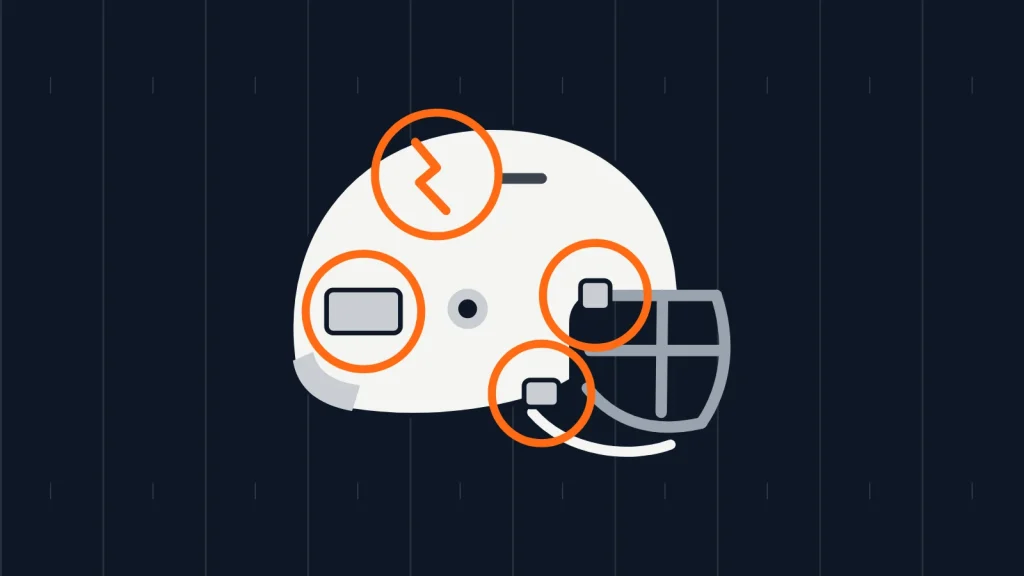
Four points deserve a look every time:
- the shell: any crack takes the helmet out of service, no argument;
- the labels: Riddell forbids removing them, and removing or obliterating them voids the warranty. They are also where the date of the last recertification is written;
- the facemask and its hardware: the attachment must be complete and original, since Riddell excludes from its warranty the fitting of a guard, facemask or component from another manufacturer. A bar like the Riddell SF-2BD-SW is replaced like for like; our guide to choosing a facemask covers the bar patterns themselves, and our step-by-step guide to changing a football facemask covers the refitting;
- the chin strap: straps, cups and hardware must be complete and correctly tensioned, as on the Riddell CamLoc Hard Cup. The catalogue gathers replacements under chin straps.
Cleaning, painting and add-ons: what harms a helmet
Riddell is explicit about day-to-day care: use only Riddell helmet cleaner and wax, because commercial cleaners and polishes may damage the shell or the liner system. Same instruction for paint: only Riddell paint systems are allowed, as commercial paints may attack the polycarbonate of varsity shells or the ABS of youth shells, which can compromise the shell's integrity and void its warranty. The most important line in the care guide is also the quietest one: helmet protection can be reduced by common substances without the damage being visible to the user.
Three further warranty breakers sit alongside: drilling new holes less than half an inch (1.27 cm) from each other or from the edge of the shell, refitting used parts instead of new ones when a liner needs replacing, and using the helmet for anything other than American football. The rest of the kit bag, from jerseys to gloves, follows different rules, covered in our guide on how to clean football gear.
On accessories, NOCSAE is firmer still. Any change, addition or alteration to a model, other than size, colour or graphics, requires a new model name and fresh certification: a helmet with something attached to it becomes an untested model, and both the manufacturer and SEI have the right to declare the certification void. That is the case for a soft shell cover such as the Guardian Cap, covered in our dedicated article. NOCSAE also notes that an add-on modifies mass, shifts the centre of gravity and can interfere with the shell's ability to disperse impact energy. Items that are neither attached to nor incorporated into the helmet, such as a thin skull cap, a headband, ear inserts or a mouthguard, do not create a new model.
When to replace rather than recondition
Three situations call for a new helmet.
The first is immediate and admits no exception: a cracked shell, a missing pad or a missing fitting piece. NOCSAE says do not use that helmet, full stop.
The second is administrative, and it is age. In most cases a football helmet can be recertified until it is ten years old, under NAERA and manufacturer guidelines. NOCSAE is transparent about where the threshold comes from: NAERA will not recondition or recertify helmets ten years old and older, but that is not a NOCSAE requirement, and NOCSAE does not direct the association's policies. A helmet that can no longer be recertified simply sees its certification expire at the manufacturer's interval.
The third concerns second-hand gear. A used helmet is judged on its labels: the NOCSAE compliance statement on the back of the shell, and the interior recertification label naming the facility and the date. Without them there is no way to know where the helmet stands. NOCSAE advises asking your coach or equipment manager about their reconditioning policy if you have doubts. Sizing is a separate check, covered in our guide to helmet sizing, and a recent model such as the Schutt F7 AiR obviously starts with more runway than an already elderly shell.
What about Europe?
NOCSAE states that its recertification standards are used nearly two million times a year by schools, teams and clubs throughout the United States and Europe. NAERA's licensed member facilities, however, are spread across the United States. So before buying a helmet meant to last several seasons, the question to put to your club, your federation and the brand's customer service is a simple one: where does recertification happen, and how long does it take?
FAQ
How often does a helmet need reconditioning?
NOCSAE states that a helmet older than two years should be reconditioned and recertified to its standard. Riddell recommends an annual visit to an authorised workshop and requires, under its warranty, reconditioning at least every two years by a NOCSAE Licensed Reconditioner.
Does a helmet that went unused all season still need to go in?
It may well. NOCSAE specifies that the frequency of recertification is determined by years elapsed since the last recertification, not by use. A barely used helmet can fall due just like any other.
Can you repaint a helmet yourself?
Riddell requires its own paint systems: commercial paints can attack polycarbonate or ABS, compromise the shell's integrity and void the warranty. On the certification side, NOCSAE states that colour and graphics do not create a new model, unlike any other modification.
Are helmets over ten years old banned?
The ten-year threshold comes from NAERA and the manufacturers: its workshops will not recondition or recertify helmets ten years old and older. NOCSAE states that this is not a requirement of its own. In practice, a helmet that can no longer be recertified loses its certification at the manufacturer's interval.
Sources
- NOCSAE — Standards (ND001, ND004, ND005)
- NOCSAE — Post-Sale Testing & Recertification
- NOCSAE — General Recertification Requirements and Recommendations
- NOCSAE — Recertification FAQs
- NOCSAE and NAERA — Recertification and Reconditioning of Sports Equipment (PDF)
- NOCSAE — What Players, Parents and Coaches Need to Know About Football Helmets (PDF)
- NOCSAE — Certification to NOCSAE Standards and Add-on Helmet Products
- Riddell — Reconditioning
- Riddell — SpeedFlex Platform Helmet Fitting Guide (PDF)