A football kit bag holds three families of material that are not cleaned the same way: fabric, foam and rigid plastic. The same drying mistake ruins a glove palm and warps a shoulder pad shell. Here is what Barnett, McDavid, Schutt, Cutters and Nike ask for, piece by piece.
Contents · 11 parts
The 2-minute summary
- Fabric goes in the machine: McDavid designs its HEX range to be machine washed and dried, and Barnett jerseys and pants are polyester.
- Cold water, mild detergent: McDavid asks for a mild detergent in cold water, with no bleach, no ironing and no dry cleaning.
- Hard shells are wiped, not washed: Schutt has its shoulder pads wiped with disinfectant wipes or dish soap and water, then dried completely.
- Heat is the enemy: no radiator, no hair dryer, no overheated car, and no tumble dryer for gloves according to Nike.
- Gloves depend on the brand: Cutters machine washes them cold, while Nike and Grip Boost wash them by hand.
- Storage matters: Schutt advises against warm, dark, damp storage in favour of a ventilated, conditioned space.
The maker's instructions come first
Nike's own glove cleaning guide opens with a simple step: check the tag. Palms lined with leather or a sticky polyester and silicone blend lose their grip under aggressive washing. Two items that look alike can need opposite treatment. McDavid allows the washing machine across the whole HEX range, but requires hand washing with the hinges removed, then air drying, for its neoprene SportMed supports.
In other words, football apparel, football protection and football shoulder pads follow three separate routines, and the instructions for your own model settle the question.
Match jerseys and pants
Barnett lists its FJ-2 match jersey as 100% polyester and dazzle, and its FP-2 match pants as 100% heavy polyester, with double stitching around the pad pockets. Those pants are sold on their own: the hip, thigh and knee pads are ordered separately and slide into the pockets, so they come out before the pants go anywhere near a machine.
Barnett publishes no washing instructions on either product page. Until it does, the sewn-in label is the authority, and turning a printed jersey inside out before washing remains the safe habit.
Soft padding is machine washable
McDavid is the most explicit maker of the group. Its official FAQ states that the HEX range is designed specifically to be machine washed and dried, using a mild detergent in cold water and a low dryer heat. Three bans come with it: no bleach, no ironing, no dry cleaning.
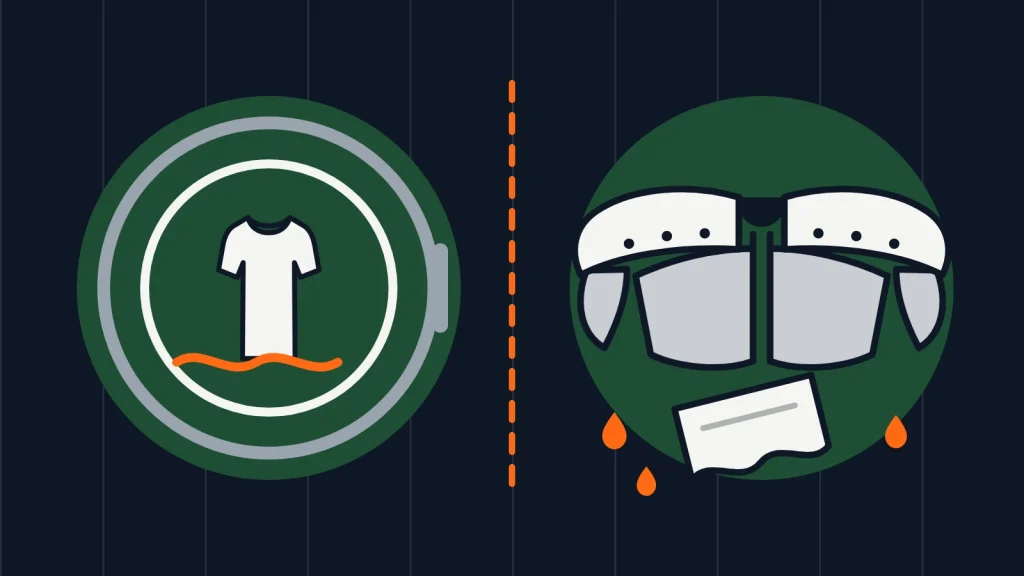
That covers much of the base layer. The HEX Sleeveless Shirt 5-Pad combines 84% polyester, 16% spandex and polyethylene foam, and the HEX Thudd Short uses the same build for the hips, thighs and tailbone. Padded girdles from that family are therefore washed like any piece of sportswear, as long as the water stays cold. For the order of the layers underneath the armour, our guide on what to wear under football pads sets out the full sequence.
Shoulder pads: a cloth, never the machine
Schutt gives a clear routine for its shoulder pads: wipe them down with disinfectant wipes or regular dish soap and water, go over them with a wet cloth, clean the inside cushion, the outside cushion and the plastic arches, then let them dry completely. Nothing is submerged and nothing goes in a machine. A shell such as the Schutt XV Flux All Purpose is treated this way, padding included.
The care guide published by the German retailer American Footballshop fills in the gaps for other brands: lukewarm water, a mild cleaner and a soft brush are enough for the shell; padding fixed in place must not be soaked, and a removable inner vest only goes in the machine when the maker specifically permits it. Aggressive solvents, petrol, paint thinner, strong bleaching products, abrasives and untested disinfectants are all ruled out.
Battle, for its part, publishes a very simple weekly routine: a wipe or a spray after every practice, with the gear hung up to air-dry, then a full wash at least once a week and again the day after each game. The brand offers a home mix of two parts water to one part white vinegar, sprayed on without wiping it off afterwards, and applies the same routine to back plates and girdles.
Drying is where gear dies
This is the step that ruins equipment. American Footballshop's guide is categorical: shoulder pads must not be dried on a radiator, in a tumble dryer, with a hot-air hair dryer, beside an open flame or inside a heavily heated vehicle. Nike says the same about gloves, because the heat damages the fabric and reduces grip.
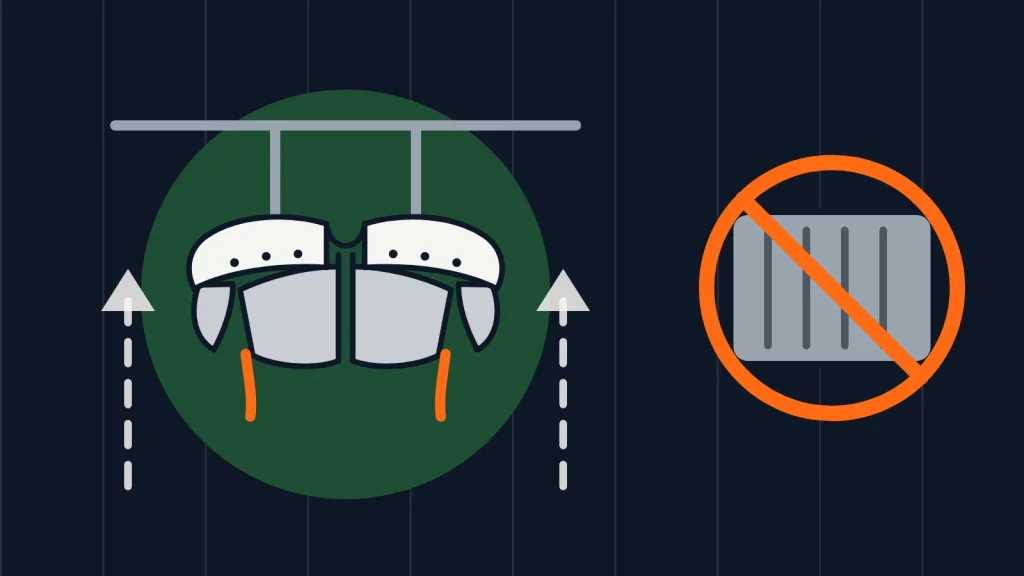
The right method takes three moves: get the item out of the bag, open the straps, hang it somewhere ventilated. Schutt insists on complete drying before storage, and advises against warm, dark, damp storage areas in favour of a well-ventilated conditioned space. A closed bag holding damp gear does precisely the opposite.
Gloves are the exception
Brands disagree here, and with reason: palms are not made of the same material from one model to the next. Cutters states that most of its gloves are machine washable and dryable, on a cold water cycle with a non-bleach detergent, and adds that regular washing cleans the C-TACK palm and restores its grip. During a session, a wipe with a damp cloth is enough to bring the grip back on a pair of Cutters Rev Pro 7; against odour, the brand suggests washing with an anti-bacterial denture cleanser tablet.
Nike takes the opposite line for its own gloves, recommending hand washing in cold or lukewarm water with a tablespoon of mild soap, since the agitation of a machine can damage the palm. Grip Boost describes the same method for its models: cold water, a non-bleach detergent, a soft brush on the palm, a thorough rinse because leftover soap stiffens the glove, a squeeze without twisting, and air drying out of direct sunlight. Nike also advises washing only when needed, once a week or less. The material differences between models are covered in our guide on how to choose football gloves, and the full range sits in football gloves.
What each maker says
| Item | Cleaning | Drying | Source |
|---|---|---|---|
| Match jersey and pants | Garment label | Garment label | Barnett |
| HEX soft padding | Machine, cold water, mild detergent, no bleach | Tumble dry on low | McDavid |
| SportMed neoprene supports | Hand wash, mild detergent | Air dry | McDavid |
| Shoulder pads | Disinfectant wipes or dish soap and water | Dry completely, ventilated space | Schutt |
| C-TACK gloves | Machine, cold cycle, non-bleach detergent | Dryer accepted | Cutters |
| Gloves, general case | Hand wash, mild soap | Air dry, never a tumble dryer | Nike |
The helmet has its own rules
Schutt limits helmet cleaning to non-citrus dish soap and water, applied with a sponge or a toothbrush for the nooks and crannies, never submerging the shell, then rinsed and dried completely. Commercial cleaners and polishes, the brand warns, may damage the shell or the liner and void the warranty. The rest of the subject is covered in our guide on helmet reconditioning and replacement, and the models themselves sit in football helmets.
FAQ
Can shoulder pads go in the washing machine?
Schutt does not allow for it: its shoulder pads are wiped with disinfectant wipes or dish soap and water, cushions and plastic arches included, then dried completely. A removable inner vest only goes in a machine when its maker permits it.
Which detergent should be used on padded gear?
McDavid asks for a mild detergent in cold water across the HEX range, with no bleach, no ironing and no dry cleaning, and a dryer set to low heat.
Does a tumble dryer damage gloves?
It depends on the brand. Cutters describes its gloves as machine washable and dryable, while Nike rules out the dryer, as the heat damages the fabric and reduces grip.
How often should gear be cleaned?
Battle recommends a wipe or a spray after every practice, then a full wash at least once a week and again the day after each game in season. Nike keeps glove washing to once a week or less.
Sources
- McDavid, official FAQ (HEX and SportMed care)
- McDavid, HEX Sleeveless Shirt 5-Pad (composition)
- Schutt, cleaning the helmet and shoulder pads
- Cutters, official FAQ (washing gloves)
- Nike, how to clean football gloves
- Grip Boost, cleaning gloves without losing grip
- Battle, how to clean football pads
- Barnett, FJ-2 match jersey
- Barnett, FP-2 match pants
- American Footballshop, shoulder pad care guide