REF · 070630025001
Football training equipment is there to build what matches demand: tackling, blocking, footwork, catching and kicking. The category covers blocking sleds for linemen, tackling dummies and hand shields for learning to tackle safely, agility kit such as cones, ladders and mini hurdles, and jugs machines for receivers and returners. This page is aimed mainly at clubs, coaches and players who put in extra work away from team practice. It helps you work out what you really need, choose kit that suits your pitch and budget, and look after it so it lasts several seasons. In the UK and Ireland, many teams share pitches with rugby or soccer clubs, which makes storage and surface rules worth checking before you buy. Our advice follows below.
 Buying guides
Football tackling drills explained: what the targeting rule forbids, the five USA Football contact levels and the kit that lets players work without a partner.
 Buying guides
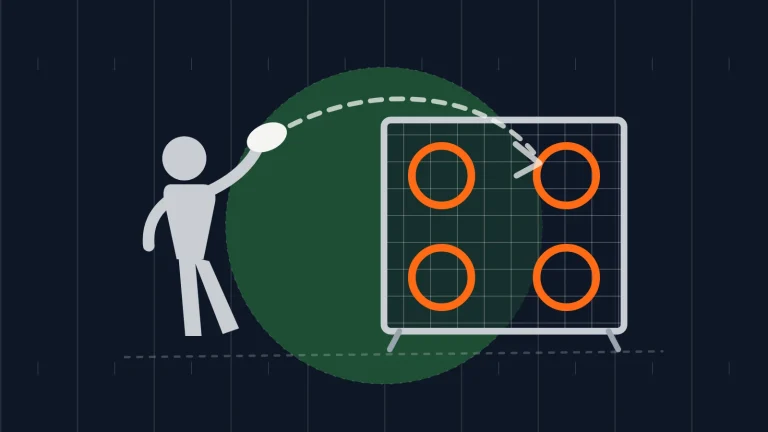
Work on your passing in the garden: target nets and their prices, the space they need, ball size by age and the drills published by the governing bodies.
Before buying anything, start from the drills you want to run, how many players will use the kit and the surface you train on.
A football sled lets linemen work on drive, pad level and explosive starts. There are single-player and multi-player models. Check the weight, the footprint, how easily it can be moved and whether it suits your surface: on artificial pitches, some runners or weights may be banned by the facility operator.
A tackling dummy or a hand shield allows players to rep technique without adding live contact between teammates. Choose them to match the age and size of your players: a dummy that is too heavy for juniors will not get used properly. Heavy-duty vinyl covers stand up better to outdoor use and are easy to wipe clean.
Cones, speed ladders, mini hurdles and resistance bands are inexpensive, easy to carry and useful for every position. For a player training alone, they are usually the best place to start.
A jugs machine lets receivers and returners catch rep after rep without a quarterback. Kicking tees and field goal holders are there for kickers. For a club, these are investments best shared between squads.
For junior sections, favour lighter, softer equipment and drills adapted to the players' age: the aim is to learn technique, not to test strength.
Store your kit somewhere dry and out of the sun, which degrades covers over time. Check seams, straps and foam regularly, and take out of service anything that is torn or has lost its shape.
For a player training alone, cones, a speed ladder and resistance bands cover a lot of drills. For a club, hand shields and tackling dummies are often the first team purchases.
It depends on the model and the venue's rules. Check with the facility operator first, as some runners can damage the surface.
It lets players rep tackling technique without adding live contact between teammates. Pick one suited to your players' age and size.
Store it dry and out of the sun, check seams and foam regularly and retire anything that is damaged.