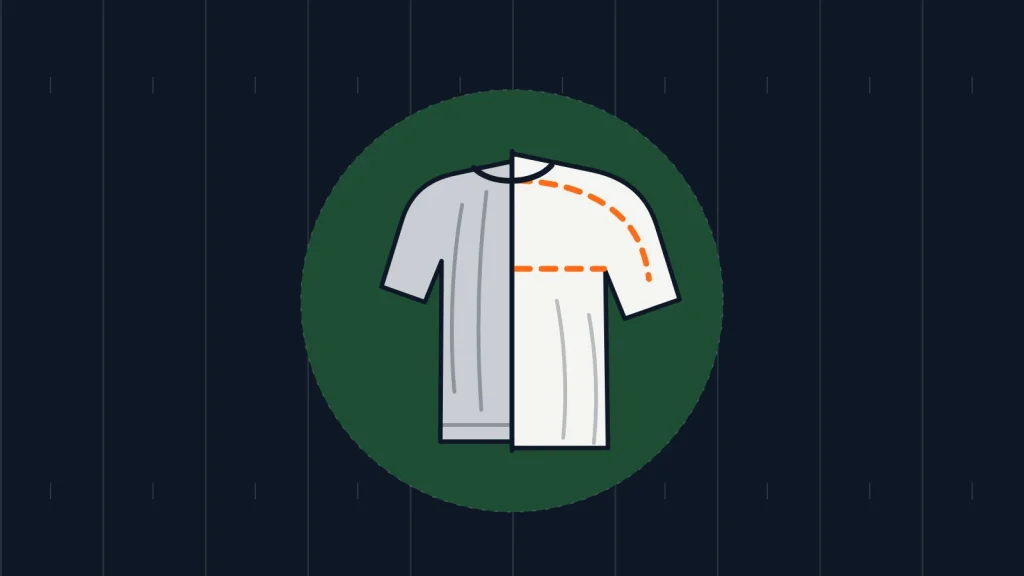
Three or four garments sit under the shoulder pads and the game pants, nobody ever sees them, and they are the ones people forget to buy. The rulebook governs only part of them; the manufacturers spell out the rest on their own product pages. Here is the order the layers go on, what each brand actually claims, and the one line in the rules that says what is allowed under the jersey.
Contents · 9 parts
The 2-minute summary
- Four layers: the compression layer against the skin, the padded girdle, the game pants, then the jersey over the shoulder pads.
- The rules say almost nothing about the base layer: the NCAA text only forbids another undergarment, a T-shirt for instance, from extending below the waistline at the torso.
- The pants must cover the knee pads, and both the pants and the knee pads must cover the knees.
- The jersey must cover the shoulder pads: its sleeves cover them completely, and it covers every pad worn at or above the waist.
- Size the jersey up: barnett advises at least one size above your shoulder pad size.
- Socks are a team decision: identical in colour and design across the squad.
Four layers, in this order
You dress from the skin outwards. The compression layer first, top and bottom. Then the girdle, which carries the hip, thigh and tailbone pads. The game pants go over that. Up top, the shoulder pads, then the jersey. The first and last layers live in our football apparel section; the ones in between sit with football protection.
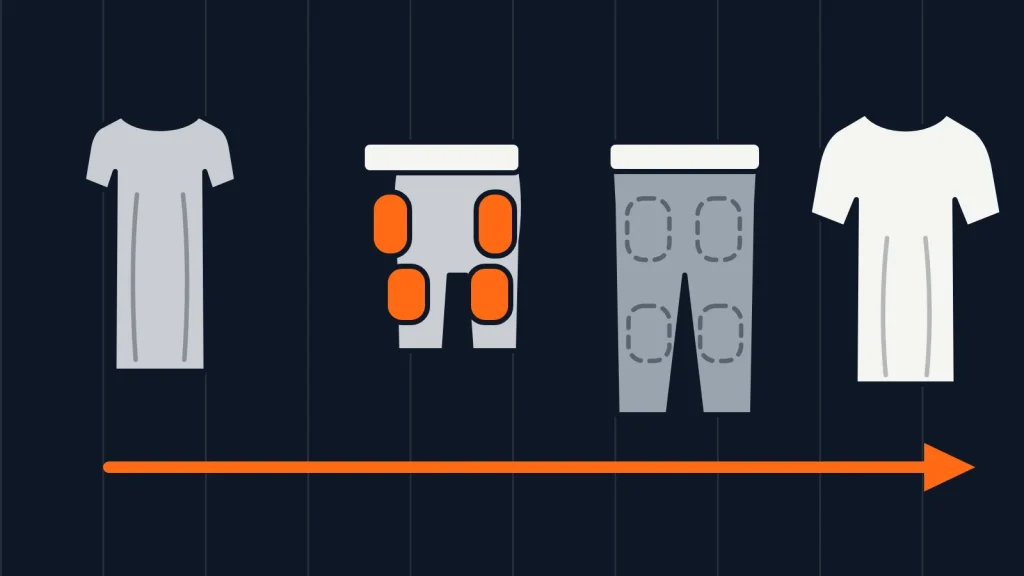
That order is not changing-room habit, it follows from the rulebook. The NCAA text reproduced by the SDCFOA officials' association requires knee pads to be covered by the pants and the jersey to cover every pad worn at or above the waist. Anything that protects you therefore ends up between two layers of fabric.
Against the skin: the compression layer
The rules are silent on this layer, with one exception: "no other undergarment (e.g., T-shirt) shall extend below the waistline at the torso". A long top hanging out of the pants is not legal. Everything else is left to you.
Manufacturers describe two families. Plain compression pieces, such as the barnett FS-01 compression short, which the brand presents as flexible and hard-wearing, with three pockets, or the Battle 3/4 Compression Tights, in 88% polyester and 12% spandex according to the brand. And padded compression pieces, which add foam where it is wanted: the McDavid HEX Sleeveless Shirt/5-Pad is listed with 9 mm HEX foam at the shoulders, ribs and spine, in a fabric of 84% polyester and 16% spandex. McDavid credits both pieces with its hDc technology, which it describes as moisture management meant to keep the player cool and dry. We file those padded tops with the rib protectors, because that is the area they cover.
AFG has tested none of these garments: what you read here is what the manufacturers publish.
The girdle, between compression and pants
The girdle is the layer that carries the lower-body pads. The rulebook asks for only one thing here: hip pads must include a tailbone protector. It states the opposite for the thighs, where there are no specifications for thigh guards.
Two constructions sit side by side in the girdles section. Integrated girdles, with the pads built into the garment, and pocketed girdles, which take removable pads. The McDavid HEX Thudd Short belongs to the first family: 9 mm HEX foam at the hips, thighs and tailbone, 6-thread flat-lock seams, and a cup pocket for a cup sold separately. Our girdle buying guide works through the choice in detail.
The game pants on top
The pants go on last on the lower body, and they are what makes the whole thing legal. The rule has two halves: knee pads must be covered by the pants, and the pants and knee pads together must cover the knees. Pants that sit too high break compliance even when the pad itself is correctly placed. The knee pads section and our knee and elbow pad guide cover those pieces.
The barnett FP-2 game pants show what this layer is expected to do: 100% heavy polyester, elastic hold at the waist and at the knee, pockets made for the pads, and double stitching to reinforce those pockets. On colour, the rulebook asks that players on a team wear pants of the same colour and design, so this one is the club's call rather than yours.
The jersey over the shoulder pads
The jersey closes the kit, and it is the most tightly governed piece of all. Its sleeves must completely cover the shoulder pads, it must cover every pad worn at or above the waist, and it must be full length and either tucked into the pants or made even with the waistline. In short, neither backplate nor shoulder pad may show once the jersey is on.
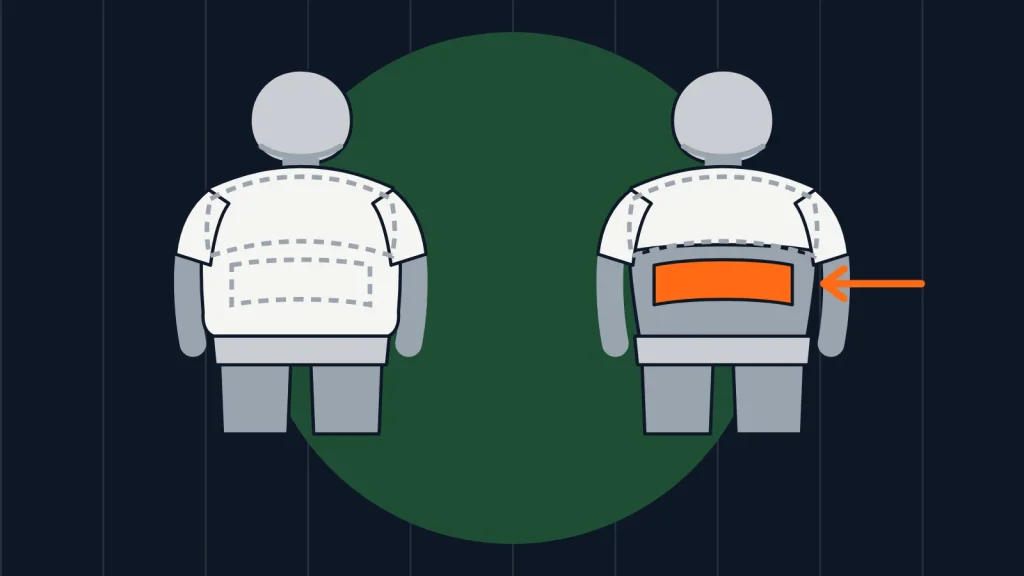
Hence a sizing note barnett puts in writing on its FJ-2 game jersey: the jersey size should be at least one size above your shoulder pad size. The FJ-2 is listed as 100% polyester and dazzle, light and breathable, in sizes S to 4XL. If you do not know your pad size yet, start with football shoulder pads and our shoulder pad sizing guide. The rest of the jersey requirements, numbers included, are gathered in our article on football uniform rules.
Socks and belt
Socks follow the same team logic as the pants: the rulebook asks for socks or leg coverings identical in colour and design across the squad. The Battle Long Football Socks are listed in spandex, with moisture-wicking fabric and a textured underfoot design meant to lock the foot into the cleat; they come as a matched pair, in adult S/M and L/XL plus a youth size. Battle also sells crew-length AstroCrew socks, sold in packs of 3, in adult S/M and L/XL plus a youth size.
That leaves the belt, usually supplied with the pants, whose only job is to hold everything in place during the game. It can be replaced on its own: the Barnett CMS-01 belt is 100% polyester, 127.5 cm long by 2.5 cm wide, with an adjustable D-ring closure, sold in packs of two in one size. Our mandatory football equipment page lists everything a player has to wear.
FAQ
Can I just wear a T-shirt under my shoulder pads?
The rulebook does not describe the base layer, but it does forbid another undergarment, a T-shirt for instance, from extending below the waistline at the torso. A short T-shirt is therefore fine, a long one hanging out of the pants is not.
Padded girdle or pants with pockets?
Both constructions exist. A girdle carries the pads in the garment itself; the barnett FP-2 game pants come with pockets made for the pads. Either way the requirement is the same: hip pads with a tailbone protector, and knee pads covered by the pants.
What jersey size should I take?
barnett advises a jersey at least one size above your shoulder pad size, so that the sleeves completely cover the pads as the rule demands.
Does the jersey have to be tucked in?
Yes, or made even with the waistline: the text asks for a full-length jersey, tucked into the pants or level with the waist.