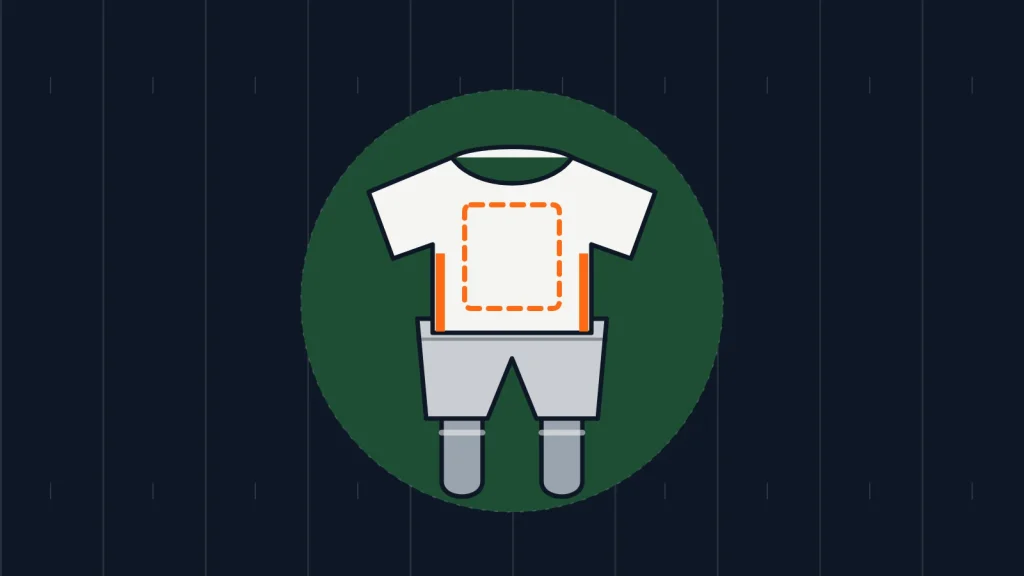
A jersey hanging out of the pants, a back number an inch too short, a tinted visor: three kit details that send a player off for at least one down. Rule 1-4 describes the uniform as closely as it describes the pads, and the European federations do not all write it the same way.
Contents · 10 parts
The 2-minute summary
- Jersey: sleeves that completely cover the shoulder pads, tucked into the pants or made even with the waistline, never taped or tied.
- Numerals: at least 8 inches on the front and 10 on the back, centred, clearly contrasted, with no logo within 1 inch.
- Colours: opposing teams in contrasting jerseys; the IFAF and the French federation require white from the visiting team, the German one does not.
- Below the waist: pants covering knee pads and knees, no pad worn outside the pants, identical socks across the team.
- Accessories: solid-colour towels, gloves with separate finger sections, clear eye shields under IFAF and French rules, tinted ones allowed in Germany.
- Penalty: a non-compliant player leaves for at least one down; illegal jerseys cost 15 yards and a team timeout each quarter.
The jersey, the most detailed item in the book
Article 1-4-5 starts with the cut. The jersey must have sleeves that completely cover the shoulder pads, must not be altered or designed to tear, and must be full-length: tucked into the pants or made even with the waistline. It has to cover every pad worn at or above the waist, and no undergarment, a T-shirt included, may extend below the waistline at the torso. A second jersey meeting the same requirements is allowed, but vests and zips, Velcro or clasps are not, and a jersey may not be taped or tied in any manner. That list is what separates a match jersey from the rest of the football apparel on offer, the Barnett FJ-2 among them.
Lettering is capped too: other than the numbers, only the player's name, the team name, sleeve stripes, a team, mascot or memorial logo, authorised advertising, the letter "C" for a captain and the team's national flag, each item staying under 16 square inches. Germany adds a marking of its own, a 12 cm letter "A" on the back of the jersey and helmet for non-European squad members.
The jersey also works as a lid. The moment a backplate or a rib protector is left uncovered, the equipment is illegal; if the pad became exposed during the down, it must be covered before the ball is next put in play. Football shoulder pads have no specification of their own: the rulebook only insists that they disappear under the jersey.
Numerals: 8 inches on the front, 10 on the back
The jersey must carry clearly visible, permanent Arabic numerals measuring at least 8 inches in height on the front and 10 inches on the back; the German book writes the same requirement as a 20 to 25 cm range. The numeral must be centred, of a colour in clear contrast with the jersey irrespective of any border around it, and no logo may appear within 1 inch of it. The individual bars are approximately 1½ inches wide, and the whole team wears the same colour and style front and back.
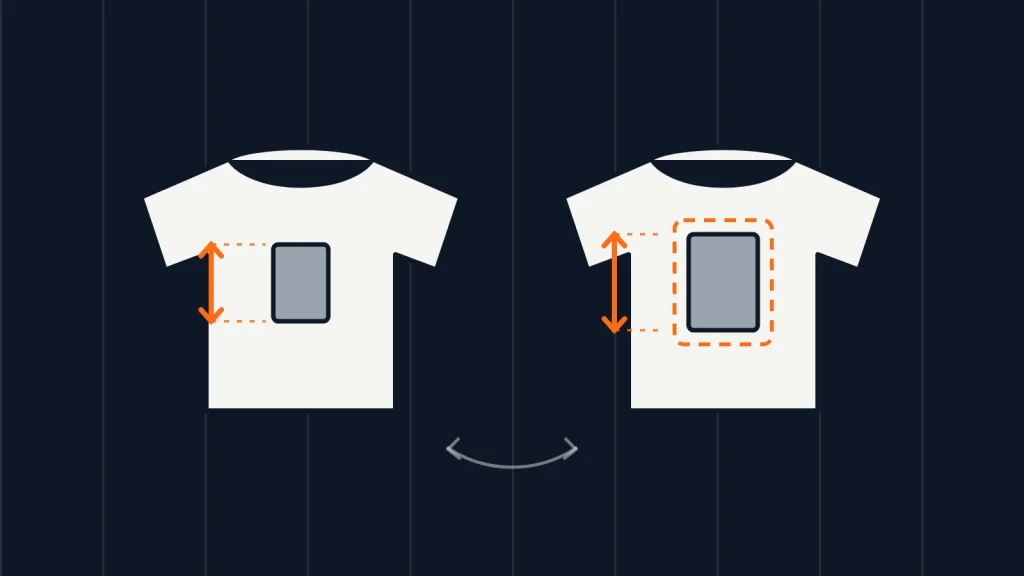
Any number worn elsewhere on the uniform must match the mandatory ones. The range itself varies from book to book, and a number preceded by a zero is illegal in all three. No more than one squad member may wear a given number, and a player entering the game after changing his number must report to the referee or commit a 15-yard unsportsmanlike conduct foul.
Two teams, two colours
Players of opposing teams wear jerseys of contrasting colours, and players on the same team wear jerseys of the same colour and design. The IFAF and the French federation add the white rule: the visiting team shall wear white, and the home team may only do so after a written agreement made before the start of the competition. Where the home team wears coloured jerseys, the visitors may do the same only with that written agreement and a certification by the competition authority that the visiting jersey contrasts.
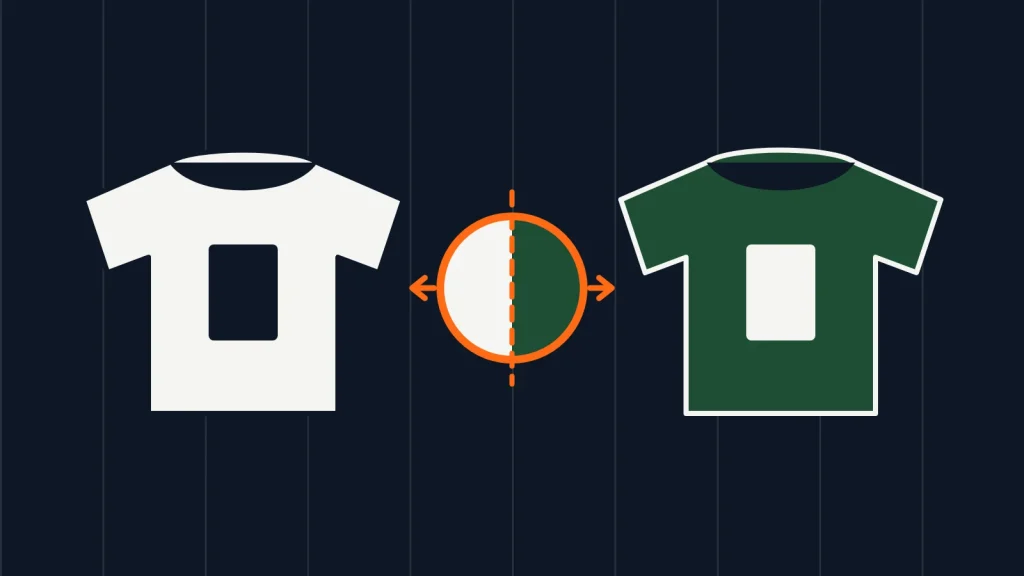
The German rulebook is the only one of the three without the white rule: the AFVD asks the visiting side to arrange different kit and refers to its own Bundesspielordnung. Everywhere, kicking off a half in non-compliant jerseys is an unsportsmanlike conduct foul: 15 yards as a dead-ball foul, plus a charged team timeout at the start of every quarter they are still worn.
From the hips to the socks
Players of a team wear pants of the same colour and design, such as the Barnett FP-2. The pants have one job above all: covering the knee pads and covering the knees together with them, "at least before the start of each play" as the French text puts it. No pad may be worn outside the pants, neither a knee pad such as the Douglas Knee Pads Vinyl ADK nor the rest of the football protection around the waist and thighs. Hip pads must include a tailbone protector, which is what a girdle provides.
Socks close the kit: identical in colour and design across the team, the Battle Long Football Socks for instance. Only three exceptions exist, an unaltered knee brace, tape protecting an injury, and barefoot kickers. Tights follow the same rule of uniformity. The rulebook sets no height for them: our guide to football sock height covers what actually decides it.
Towels, gloves and eye shields
A towel must be a solid colour with no words or symbols under IFAF and French rules, which also set its dimensions; the AFVD sets neither colour nor size. A glove is a fitted covering for a hand with separate sections for each finger and thumb and no material connecting them: that is the only constraint on the shape of football gloves, whose colour is free.
The visor is where the books disagree most clearly. The IFAF requires a clear, untinted eye shield made from moulded or rigid material, allows no medical exception and expressly prohibits mirrored eyewear; the French federation repeats that text, but allows a federal medical waiver. The AFVD writes that visors may be clear, tinted, mirrored or coloured, at the player's own risk. Ask your competition organiser before buying one. The rest fits in a line: eye shade uniformly black, written game information on the wrist, arm or belt, bandannas illegal as soon as they show under the helmet, and football cleats limited to half an inch of protrusion.
Where the books differ
| Point | IFAF (international) | FFFA (France) | AFVD (Germany) |
|---|---|---|---|
| Number range | 0 to 99 | 1 to 99 | 0 to 99 |
| Numeral height | 8 in front, 10 in back | same as IFAF | 20 to 25 cm |
| Visiting team jersey | white, unless agreed in writing | white, unless agreed in writing | no white rule, refers to the BSO |
| Tinted or mirrored visor | prohibited | prohibited | allowed, at the player's risk |
| Towel | solid colour, 4×12 to 6×12 in | plain white, 10×30 to 15×30 cm | small towel, no size published |
| Cleat protrusion | half an inch | 12.7 mm | 13 mm |
What happens to a non-compliant player
No player wearing illegal equipment or failing to wear mandatory equipment is allowed to play. Spotted by an official, he leaves for at least one down; his team may spend a charged timeout to save him that down, but in no event may he play with the item at fault. Where the equipment becomes illegal through play, leaving is no longer compulsory, but he may not take part until it is fixed. That covers the kit as much as football helmets themselves, whose four- or six-point chin strap — a Riddell CamLoc Hard Cup, say — must have all its points secured whenever the ball is in play, or the mouthguard such as the Shock Doctor Gel Max, neither white nor transparent.
Responsibility runs back to the bench: before the game, the head coach certifies in writing to the umpire that the players have been told what is mandatory and what is illegal, that they have been provided with that equipment and that they have been instructed how to wear it.
FAQ
Does the jersey have to be tucked in?
It must be tucked into the pants or made even with the waistline, and cover every pad worn at or above the waist. A jersey that leaves a shoulder pad exposed makes the equipment illegal.
Can a T-shirt be worn under the jersey?
Yes, as long as no undergarment extends below the waistline at the torso.
How tall must the numbers be?
At least 8 inches on the front and 10 inches on the back under IFAF and French rules; the German book writes 20 to 25 cm.
Is a tinted visor allowed?
Not under IFAF rules, which demand a clear shield and prohibit mirrored eyewear, and not in France. The AFVD allows them in Germany, at the player's own risk.
Sources
- IFAF, Football Rules and Interpretations 2025, Rule 1-4: https://amerikanskeidretter.no/wp-content/uploads/2025/02/IFAF-Football-Rules-and-Interpretations-med-norske-tilpasninger-2025.pdf
- AFVD, American Football Regeln & Interpretationen 2025, section 1.4: https://afvd.de/wp-content/uploads/2025/08/AFVD_AMERICAN-FOOTBALL-REGELN_2025.pdf
- FFFA, Règles du football américain, édition 2022/2023, Rule 1 section 4: https://l2fa.fr/wp-content/uploads/2022/11/Regles-FA-2022-2023-20220725-correction2221109.pdf