Tackling is the most tightly governed action in American football: two international rules set its limits, and federations cap how much contact a practice may hold. This guide gathers those official texts and what football training equipment actually allows. You will find no body-technique advice here: none of the documents consulted publishes any.
Contents · 9 parts
The 2-minute summary
- The helmet is not a weapon: IFAF rule 9-1-3 forbids targeting an opponent and making forcible contact with the crown of the helmet.
- The crown is defined: the top segment of the helmet, the circular area set by a 6-inch radius from the apex.
- Defenceless players are protected: rule 9-1-4 covers forcible contact to their head or neck. Both fouls cost 15 yards and automatic disqualification.
- Five contact levels: USA Football sorts drills into Air, Bags, Control, Thud and Live Action, and counts only the last two as full contact.
- The numbers are set: 30 minutes of full contact per practice at USA Football, three contact days a week in the preseason at the NCAA Sport Science Institute.
- That is what the kit is for: shields, bags, dummies and sleds teach the fundamentals while cutting live contact.
What the rules rule out first
IFAF rules govern every competition of the international federation, and its statutes require member federations, from Britain's to France's and Germany's, to play by them. Rule 9-1-3 states that no player shall target and make forcible contact against an opponent with the crown of their helmet. The text leaves no room for interpretation: the crown is "the top segment of the helmet", the circular area defined by a 6-inch radius from the apex.
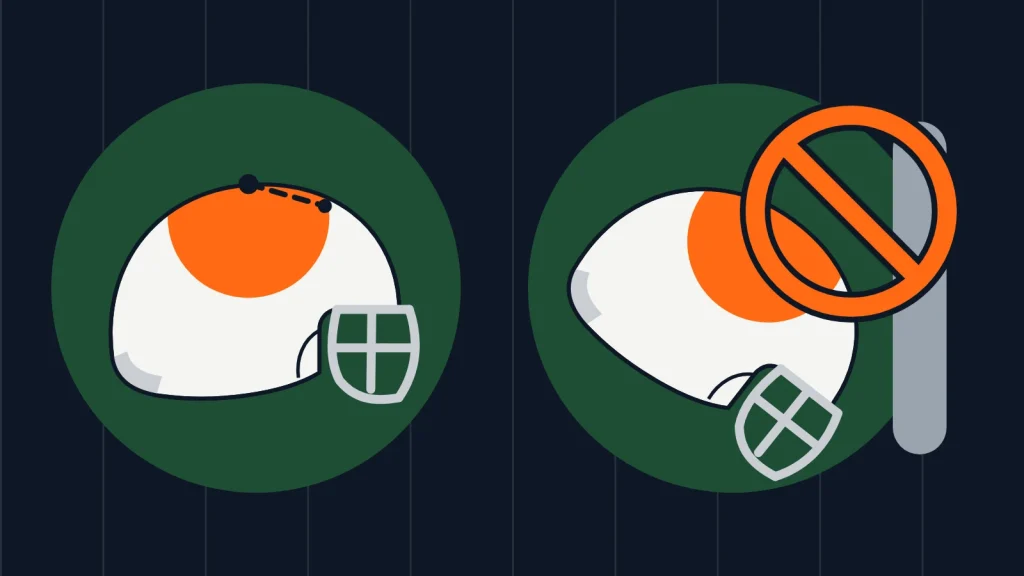
Rule 9-1-4 protects the defenceless player: nobody may target the head or neck area of a vulnerable opponent and make forcible contact there with the helmet, forearm, hand, fist, elbow or shoulder. Rule 2-27-14 gives an open list: the passer, a receiver attempting a catch, a kicker, a kick returner, a player on the ground or out of the play, a player taking a blind-side block, a ball carrier already in an opponent's grasp with progress stopped. When in question, a player is defenceless.
Both fouls require at least one "indicator of targeting" from rule 2-35: launching off the ground with an upward and forward thrust, leading with the helmet, shoulder, arm or elbow at the head or neck, or lowering the head before making forcible contact with the crown. The penalty is the same either way: a flagrant foul, 15 yards, automatic disqualification. An approved ruling adds that a ball carrier who lowers their head and deliberately attacks a defender is guilty of targeting too, "by choosing to attack with their head".
The five contact levels
USA Football grades drills on five levels. Its practice guidelines for youth tackle football, endorsed by three sports medicine bodies, also frame the NCAA Sport Science Institute document, which reuses the definitions.
| Level | What the drill allows | Classification |
|---|---|---|
| Air | Unopposed, no contact | No contact |
| Bags | Against a bag or another soft-contact surface | No contact |
| Control | Assigned speed, a winner named in advance, contact above the waist, players stay on their feet | No contact |
| Thud | Competitive speed up to contact, no predetermined winner, contact above the waist, players stay on their feet | Full contact |
| Live Action | Game-like conditions: the only level at which players are taken to the ground | Full contact |
The NCAA Sport Science Institute reuses that frame, files Air, Bags and Control under "non-contact/minimal contact", and reminds coaches that intentional contact with or to a helmet "has no place in practice or competition".
How much contact, and how often
USA Football caps full contact at 30 minutes within a practice session and recommends a maximum of four practices a week in the preseason and three in the regular season; two-a-day practices are prohibited.
The NCAA Sport Science Institute sets a comparable frame for the college game. In the preseason, in any seven days after the acclimation period: up to three days may be live contact, whether tackling or thud; three practices must be non-contact or minimal contact; a non-contact practice must follow a scrimmage; and one day must have no football practice. In season: three non-contact or minimal-contact days, one day of tackling to the ground, one day of thud. These volumes remain American recommendations: in Europe, the IFAF rule book governs the match.
The kit that lets you work without a partner
Manufacturer Rogers Athletic sums up what blocking and tackling sleds are for: teaching the fundamentals "while reducing live contact during practice". Dummies and shields let players work "with game-day aggressiveness" in a controlled setting. Each tool matches a level.
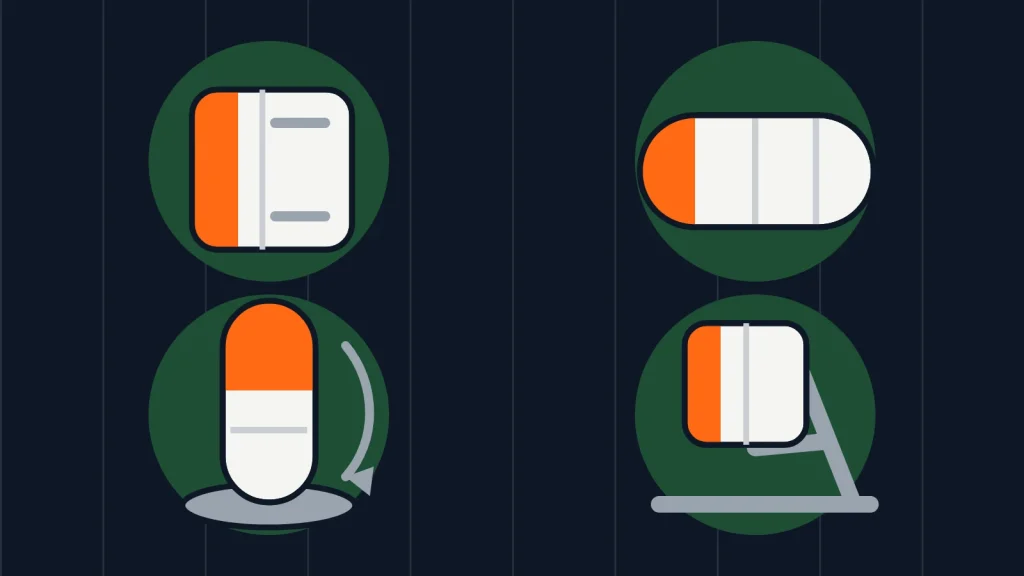
- Shields and bags are the physical form of the Bags level, defined as a drill run against a bag or another soft-contact surface.
- Stand-up and pop-up dummies stand on their own base and come back upright: the approach can be repeated without tying up a team-mate.
- Sleds add the resistance of a weighted frame. Rogers Athletic's Youth MOD Sled, listed "for seventh Grade and younger", is used for shoulder blocks and base blocks on offence, and for separation and rip, swim and spin moves on defence.
- Chutes and tackle wheels round out the same manufacturer's range.
None of this kit is in the AFG catalogue, and the pages consulted publish no dimensions or weights. The collection holds the Barnett FN-01 and Barnett FN-02 precision nets, which serve passing rather than contact; our guide to practising football throwing at home covers solo work.
What a tackler has to wear
IFAF rule 1-4-3 lists the mandatory equipment: helmet, hip pads, jersey, knee pads, mouthpiece, trousers, shoulder pads, socks and thigh guards; jersey and trousers fall under football apparel. Rule 1-4-4 adds that the helmet must carry a face mask, a four- or six-point chin strap fastened whenever the ball is in play, and the manufacturer's or reconditioner's NOCSAE certification. Without that kit, a player is not allowed to play.
For those three items, browse football helmets such as the Riddell SpeedFlex, football shoulder pads like the Schutt XV Flux All-Purpose, and mouthguards including the Shock Doctor Gel Max. Our rundown of mandatory football equipment has the full list.
Youth football: contact arrives in stages
In France, the national technical directive of the FFFA organises youth categories around 5-a-side and 7-a-side formats with flag pulling, in regulation helmets and equipment. Its reminder of the contact rules is blunt: every contact is made with the hands. A player may push an opponent back with the hands but must never engage the helmet; the ball carrier has to avoid contact, while the defender may grab the jersey to make the flag pull easier. Flag football plays the same entry role: the road to tackling starts with a game that has no contact in it.
FAQ
Does targeting apply to the ball carrier too?
Yes. An approved ruling published with rule 9-1-4 penalises a ball carrier who lowers their head and deliberately attacks a defender: by choosing to attack with the head, that player falls under rule 9-1-3.
Can you learn to tackle without a partner?
Partly: bags, shields, dummies and sleds exist for that. But the only level at which players go to the ground is still Live Action, opposition in game-like conditions.
How much full contact per session?
USA Football sets a 30-minute limit, full contact meaning the Thud and Live Action levels.
Do those limits apply in Europe?
No. They are recommendations from USA Football and the NCAA for their own competitions. In Europe the IFAF rule book governs the match, and each federation frames its own youth categories.
Sources
- IFAF, Football Rules and Interpretations, 2026 edition (rules 1-4-3, 1-4-4, 2-27-14, 2-35, 9-1-3, 9-1-4)
- USA Football, Practice Guidelines for Youth Tackle Football
- NCAA Sport Science Institute, Interassociation Consensus: Year-Round Football Practice Contact for College Student-Athletes
- FFFA, national technical directive, youth category regulations
- Rogers Athletic, football practice equipment and Youth MOD Sled