After a few sessions the palm skids and the ball bounces off your fingers. Most of the time the glove is not worn out, it is dirty. Here is what the manufacturers publish about a clogged palm, the washing instructions each brand gives, and what the playing rules forbid you to put on a glove.
Contents · 8 parts
The 2-minute summary
- Dirt before wear: Battle writes that the sticky outer layer picks up dust, dirt and debris from the field, and that sweat blocks it the way grass does.
- A damp cloth is often enough: Cutters says that during practice or a game, wiping the glove with a damp cloth cleans the dirt and restores the grip.
- Every brand has its own rule: Cutters calls its gloves machine washable on a cold cycle, while Nike and Grip Boost insist on hand washing.
- Nothing goes on top of the palm: the IFAF rulebook lists any adhesive material applied to equipment or to a player as illegal equipment (1-4-7-g).
- Gloves have an end date: Battle states consistent tack for one full season, roughly four to eight months.
Why a palm loses its tack
A receiver glove has no mechanism: its grip comes down to the state of the palm surface. Battle puts it plainly, saying the sticky outer layer on your gloves collects dust, dirt and other debris from the field, the ball and other players. Grip Boost says much the same, noting that grime and dirt from previous games wear the grip down. The relief that bites into the leather of the ball fills up, and the hand slides. It is the first thing to check on receiver gloves that have stopped holding anything.
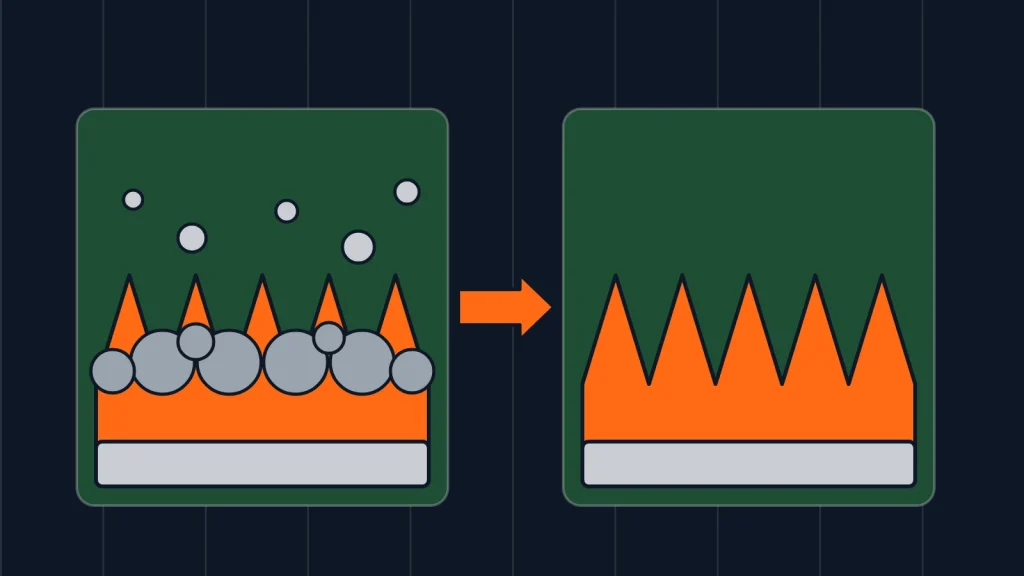
Sweat does the same job. Battle writes that it blocks the sticky surface in the same way grass, dirt and grime do, that it degrades the adhesive layer, and that its salts and oils weaken grip polymers. The surface you play on counts too: the brand describes artificial turf as significantly more abrasive than natural grass.
Heat is the last factor. Nike points out that palms are lined with leather or a sticky polyester and silicone blend that can lose its grip under aggressive washing, and bans the tumble dryer because heat damages the fabric and reduces grip. The make-up is public on the product pages: the palm of the Nike Vapor Jet 9 is given as 75% polyester, 20% silicone and 5% elastane.
What each manufacturer asks for
The instructions differ, and that is to be expected: palms are not made of the same material from one brand to the next. Cutters fits a perforated Air C-TACK grip to the Cutters Rev Pro 7, Grip Boost a silicone palm with a chitosan formula on the Grip Boost Stealth 6, and Under Armour a UA GlueGrip silicone grip on the Under Armour Blur. The one habit shared by all four brands: read the glove label before washing it, as Nike asks you to.
| Brand | Washing | Drying | Stated frequency |
|---|---|---|---|
| Cutters | Machine, cold cycle, non-bleach detergent | Machine dryer accepted, according to the FAQ | "Regularly", which cleans the C-TACK and restores the grip |
| Nike | By hand, cold or lukewarm water, a tablespoon of mild soap, a few minutes' soak | Air dry, never a tumble dryer | Once a week at most |
| Grip Boost | By hand, basin of cold water, non-bleach detergent, soft bristle brush or toothbrush | Air dry, out of direct sunlight | At least once a month during the season |
| Battle | By hand, water temperature from the care label, a little mild soap | Not specified on the page consulted | Surface clean as soon as the palm is dirty |
Two details make the difference. Grip Boost stresses the rinse: as long as soap is left in the glove, it turns stiff. Battle separates a proper wash from a surface clean, saying that against a film of muck on the palm adhesive, a baby wipe, a damp microfibre cloth or a splash from a water bottle will do. These instructions make no mention of position, so they apply to lineman gloves as well.
Two ways of building the tack
Palms do not all age the same way, because brands do not build the grip the same way. Cutters claims its tack is part of the material, not a post application, and argues that rival grips peel off, wear out faster and do not self-restore. That is one brand's sales argument about its competitors, and should be read as such, but it does describe two genuinely different constructions.
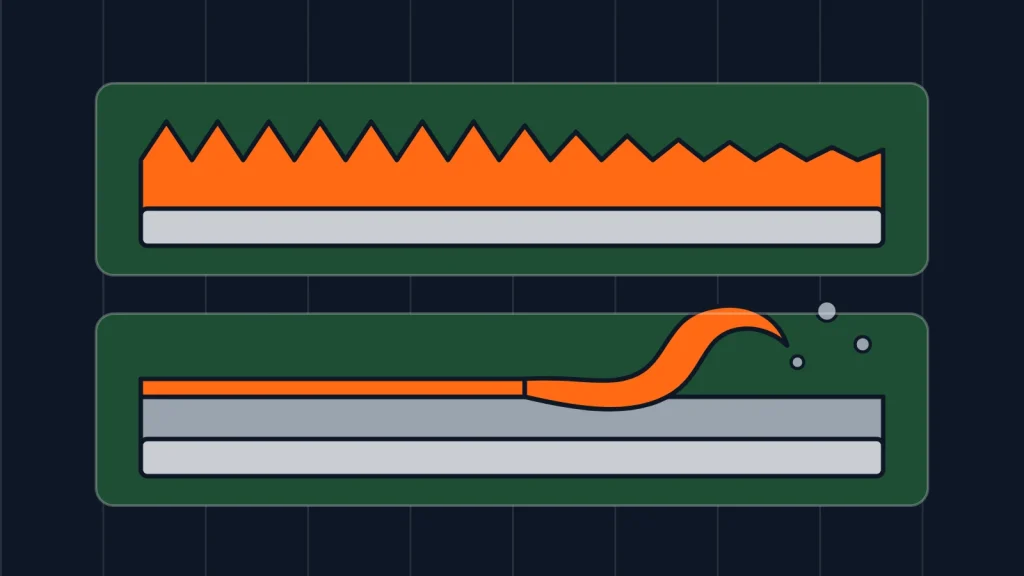
The gap shows up in use. When the tack runs through the material, a wipe brings a clean surface back from underneath. When it is only a layer sitting on top, there comes a point where there is nothing left to clean: Battle admits the palm material can wear down so much that there is simply no surface for grip enhancers to stick to. On the Battle Triple Threat, the brand states an UltraTack palm taken to the legal tackiness limit, and compliance with NCAA and NOCSAE standards.
What the rules forbid you to apply
This is the part the tutorials leave out. The IFAF rulebook, used by the European federations, lists as illegal equipment "adhesive material, paint, grease or any other slippery substance applied to equipment or on a player's person, clothing or attachment", with eye shade as the only exception (rule 1-4-7-g, 2026 edition). The consequence is written down too: no player wearing illegal equipment may play, and an official who spots it sends the player off for at least one down unless the team takes a charged timeout (1-4-8). The ball is covered by the same principle: it may not be altered, and that includes any ball-drying or ball-warming substance (1-3-1-i). The rule covers American footballs exactly as it covers gloves.
As for the glove itself, the rulebook asks for a label or stamp reading "NF/NCAA Specifications", showing voluntary compliance with test specifications on file with the SFIA or NOCSAE, unless the glove is made of unaltered plain cloth (1-4-6-b-2). That marking is covered in detail in our guide to choosing football gloves.
That leaves the products sold to revive a palm, such as Grip Boost's glove gel. The text names no commercial product and draws no line between tack built into the palm and tack added to it: it targets adhesive material applied to equipment. The call therefore belongs to the officials on the day, and to your league, which is worth asking before you use any of it in a match. Battle raises a separate warning: do not assume hand sanitiser suits your palm material, and do not treat rubbing alcohol as a default deep-cleaning solution.
When the glove is finished
At some point cleaning stops working. Battle states that most gloves deliver consistent tack for one full season, roughly four to eight months, and that heavy use or artificial turf shortens that. The brand lists the signs that call for a new pair: a palm that stays slick even after wiping, a glove gone loose at the wrist and fingers, cracking palms, seams coming apart, torn fabric and peeling layers.
On storage, heat and damp are the two enemies: no tumble dryer according to Nike, no direct sunlight according to Grip Boost, no zipped kitbag where the glove stays wet, since damp storage speeds up the breakdown according to Battle. The full range sits in football gloves.
FAQ
Is a sticky gel or spray allowed in a match?
The IFAF rulebook lists any adhesive material applied to equipment or to a player as illegal equipment (1-4-7-g). It names no product, so the decision rests with the officials and with your league, which you should ask before using one.
Can football gloves go in the washing machine?
It depends on the brand. Cutters specifies a machine wash on a cold cycle with non-bleach detergent. Nike asks for hand washing instead, since the agitation can damage the palm, and Grip Boost also describes washing in a basin.
How often should they be washed?
Nike advises washing only as necessary, once a week or less. Grip Boost recommends at least once a month during the season. Cutters advises washing regularly, which cleans the C-TACK and restores the grip.
How long does a glove keep its tack?
Battle states consistent tack for one full season, roughly four to eight months, with a shorter life under heavy use or on artificial turf.