The mouthguard is mandatory equipment in American football, exactly like the helmet, the football shoulder pads or the hip pads. The rulebook is more specific than most players expect: it dictates a colour, a material and how much of the mouth must be covered, and it says what happens when the piece is missing. This guide sticks to what the IFAF, the American Dental Association and the manufacturers actually publish.
Contents · 10 parts
The 2-minute summary
- Mandatory: the IFAF lists the mouthpiece as mandatory equipment, alongside the helmet and the shoulder pads.
- Neither white nor clear: the rule demands a readily visible colour and cover of every upper tooth.
- Three families: stock, boil-and-bite and custom-made at a dental surgery.
- No NOCSAE standard: no mouthguard is "NOCSAE certified"; that library of standards does not cover the item.
- Braces: you cannot mould a boil-and-bite guard over brackets, and silicone models exist for that case.
- Care: rinse after every use and replace at least once a year, according to Makura.
What the rulebook demands
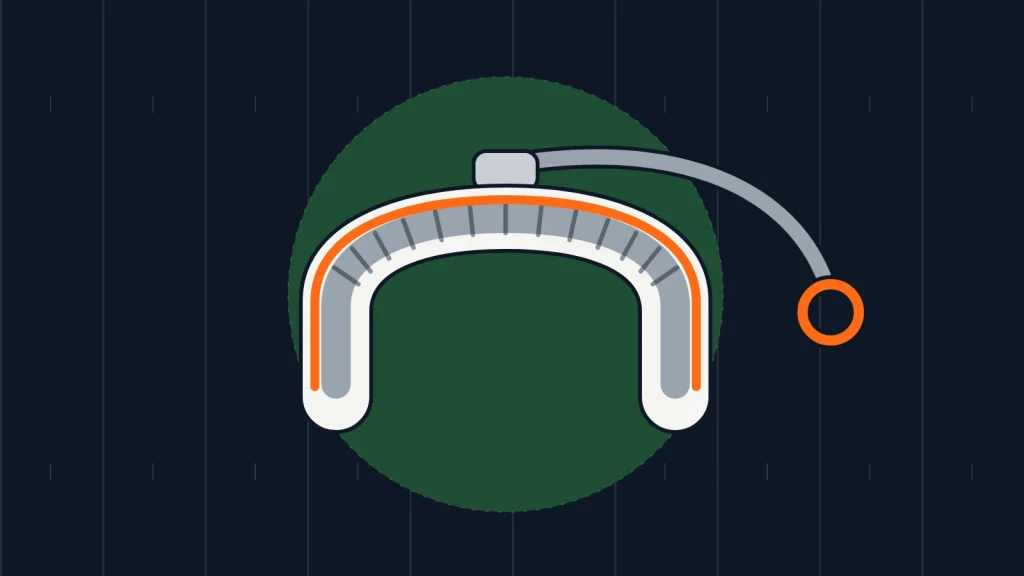
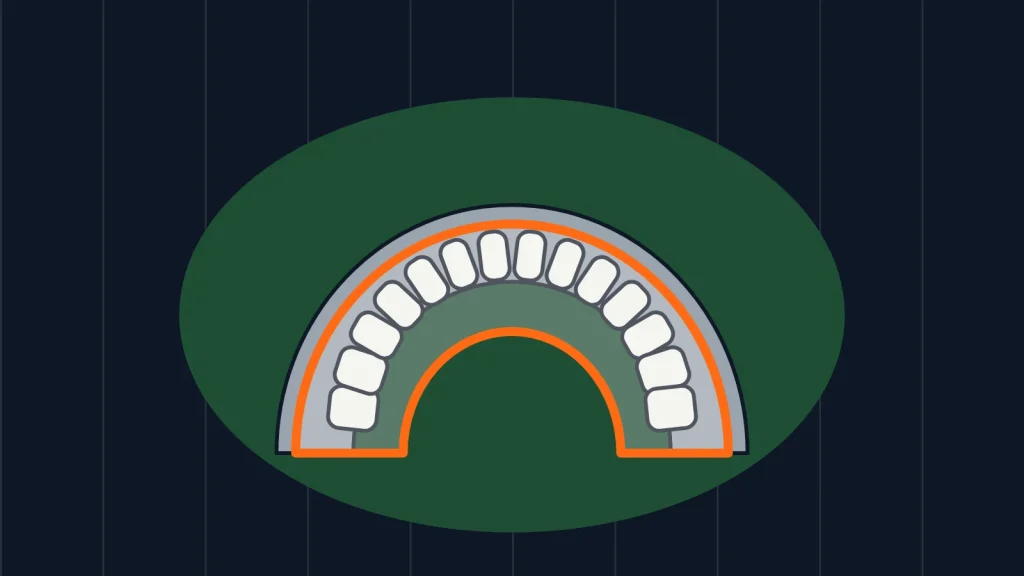
The mouthpiece sits in IFAF rule 1-4-4, the article covering mandatory equipment. The wording leaves no room: "The mouthpiece must be an intra-oral device of any readily visible colour. It must not be white or transparent. It must be made with FDA-approved base materials (FDCS) and cover all upper teeth. It is recommended that the mouthpiece be properly fitted."
Rule 1-4-8 sets out the consequence: "No player wearing illegal equipment or failing to wear mandatory equipment shall be permitted to play." A player caught without a mouthguard leaves the game for at least one down; the side can spend a charged timeout to keep them from missing a snap, but they do not play without the piece. Rule 1-4-9 adds that the head coach certifies in writing to the umpire, before kick-off, that every player has been told what equipment is mandatory, has been provided with it and has been instructed how to wear it.
One trap catches gear bought in the United States. American high school rules dropped the colour ban in 2016: "Completely clear or completely white tooth and mouth protectors are no longer prohibited" (NFHS rule 1-5-1d(5)a). A clear or white mouthguard is therefore legal on a US high school field but refused under the IFAF rulebook that European federations apply. Those same references reach Europe: Shock Doctor's European store lists the Gel Max in "Trans Clear" and "White Clear" next to eight visible colours. The rest of the kit follows the same compliance logic, from football helmets to the wider range of football protection, and our mouthguards sit in their own collection. For the wider picture, see our guide to the rules of American football.
Three families, three levels of fit
The American Dental Association splits mouthguards into three categories. The stock model is "manufactured in a limited range of sizes, prefabricated without adaptation to the user's mouth". The mouth-formed or boil-and-bite family covers the guards "designed to soften when placed in hot water for a short period of time". The custom option is "fabricated in a dental office or laboratory from individual patient impressions using thermoforming techniques".
| Family | Fit | Where to get one |
|---|---|---|
| Stock | No adaptation to the player's mouth | General retailers, sports shops |
| Boil-and-bite | Impression taken at home in hot water | Specialist American football retailers |
| Custom-made | Individual impression taken by a professional | Dental surgery or laboratory |
The ADA states the case for wearing one at all by citing the research behind its position: users are "between 82% and 93% less likely to suffer dentofacial injuries". It also awards a Seal of Acceptance to shop-bought products whose components are safe in the mouth and which pass its impact and durability testing.
Moulding a boil-and-bite guard
Moulding is the one step where a player can ruin their own protection. Shock Doctor publishes a timed procedure for the Gel Max: "1'30 in hot water, 3s in cold water and then put it in the mouth to mould it". Makura describes the same principle for the Tephra Max Convertible, whose GELFORM liner takes the impression once the guard has been through hot water. Our step-by-step guide walks through the full manufacturer instructions, minute by minute: see how to mould a boil-and-bite mouthguard.

Two practical consequences follow. A badly bitten guard stays badly fitted, and the IFAF explicitly recommends that the mouthpiece be "properly fitted"; a guard that shifts around ends up dangling from the facemask. And hot water is the wrong idea entirely on braces, which the section below covers.
Some models skip this step: the Battle Speed XL Mouthguard, with a fixed, extra-large strap, is advertised by Battle as ready to wear with no boiling required, in one size.
With or without a helmet strap
Convertible models ship with a detachable strap linking the guard to the facemask: the Shock Doctor Gel Max and the Makura Tephra Max Convertible are both worn either way. The Battle Speed Air Mouthguard follows the same logic with its ThickStrap Switch system, removable from the back: strapped for tackle football, strapless for flag football, 7v7 and training, according to Battle. The strap saves the guard from the turf between series, but it creates a temptation officials know well.
Approved ruling A.R. 1-4-8:I covers two cases. A player obviously not wearing a mouthpiece must leave the field for at least one down and can only return once properly equipped (a team timeout lets them stay without missing a snap). A player whose mouthpiece is hanging from the facemask is simply notified by the official; only if they still have not put it on correctly after two notifications does the team get charged a timeout or a delay penalty. The strap is for between plays, not during them. It is also worth checking when you fit a facemask: on a Riddell SpeedFlex wearing a Riddell SF-2BD-SW, the clip goes on a lower bar, and our guide to choosing a facemask covers the mounting systems.
Braces change the answer
With brackets in place, boil-and-bite is the wrong tool: an impression taken on one day is wrong by the next adjustment. Shock Doctor sells a dedicated model, the Shock Doctor Braces, in "100% medical-grade silicone, no boiling required" that "instantly fits over braces" and "adapts to changes in tooth position as braces are adjusted". It comes in Youth (10 and under) and Adult (11 and over), at €19.96 on the brand's European store as of 1 November 2026.
The ADA adds that "a dental professional may provide assistance with the final molding, particularly if the user has orthodontic appliances". A visit to the orthodontist before the season remains the safest route while an appliance is fitted.
Certification: what exists and what does not
NOCSAE is the body that writes the standards for football helmets and facemasks. Its library runs from ND001 to ND201 and covers helmets, faceguards, shin guards and chest protectors, but not one of those standards addresses mouthguards. A "NOCSAE certified" mouthguard does not exist. The only regulatory marking you will meet in Europe is the CE mark, and not every manufacturer claims it.
| Model | Declared certification | Sizes | Price recorded |
|---|---|---|---|
| Shock Doctor Gel Max | None stated | Youth (10 and under), adult (11 and over) | €19.90 (27/09/2026) |
| Shock Doctor Pro Mouthguard | None stated | Youth (10 and under), adult (11 and over) | €14.95 (25/10/2026) |
| Makura Tephra Max Convertible | CE, SATRA, UKCA, impact resistance level 3 | Senior, one size | €11.95 (27/09/2026) |
| Shock Doctor Gel Max Power | None stated | Youth (10 and under), adult (11 and over) | €27.95 (27/10/2026) |
| Shock Doctor SuperFit Power | None stated | Adult, one size | €24.95 (27/10/2026) |
| Shock Doctor V1.5 | None stated | Youth (10 and under), adult (11 and over) | €9.95 (28/10/2026) |
Makura spells out the basis of its claim: CE marking, SATRA and UKCA certification, level 3 impact resistance, testing to BS EN 1186:2002 and BS EN 71-3:2013, and a composition free of latex, BPA, formamide and phthalate (DEHP). Shock Doctor states no certification on its European product page.
Care and replacement
Makura sets out the routine: brush your teeth before and after use, rinse the guard in cold or lukewarm water after every session, keep it in the case supplied, and replace it at least once a year. Shock Doctor also ships the Gel Max with a storage box. For a young player that annual rhythm is a floor rather than a target, since the teeth move from one season to the next.
FAQ
Is a clear mouthguard legal in a match?
Not under IFAF rules: rule 1-4-4 demands a readily visible colour and explicitly bans white and transparent. Those colours are allowed in US high school football, where the ban was lifted in 2016.
Should I look for a NOCSAE certified mouthguard?
That certification does not exist. The NOCSAE library covers helmets, facemasks and other protective items, but no mouthguard standard.
Can you boil-and-bite a mouthguard over braces?
No. Shock Doctor offers a medical-grade silicone model for that case, which fits without hot water and follows the teeth as they move. The ADA recommends professional help with the final moulding when an appliance is fitted.
How often should a mouthguard be replaced?
Makura recommends replacing it at least once a year, and storing it in its case between sessions.
Sources
- IFAF, Football Rules and Interpretations 2025, rules 1-4-4, 1-4-8, 1-4-9 and A.R. 1-4-8:I: https://amerikanskeidretter.no/wp-content/uploads/2025/02/IFAF-Rules-and-Interpretations-2025.2.1.pdf
- NFHS, 2016 Football Rules Changes, rule 1-5-1d(5)a: http://www.nfhs.org/resources/sports/football-rules-changes-2016
- NOCSAE, standards library: https://nocsae.org/standards/
- American Dental Association, Athletic Mouth Protectors (Mouthguards): https://www.ada.org/resources/ada-library/oral-health-topics/athletic-mouth-protectors-mouthguards
- Shock Doctor EU, Gel Max: https://shockdoctorsports.eu/en-gr/products/gel-max
- Shock Doctor EU, Braces Mouthguard: https://shockdoctorsports.eu/products/braces
- Makura, Tephra Max: https://www.makurasport.com/products/tephra-max/