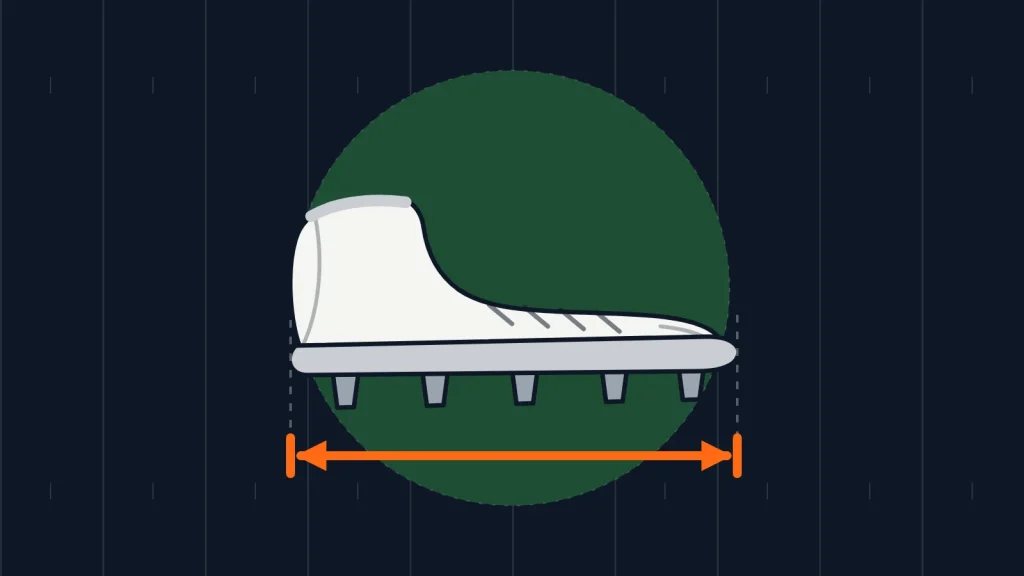
A pair that is too long lets the foot slide on every cut, and a pair that is too short shows up before the warm-up is over. Nike and Under Armour both publish how to measure, how to read their charts and what to do between sizes. This guide puts those instructions side by side and adds nothing to them: we have tested none of these shoes.
Contents · 8 parts
The 2-minute summary
- Measure, do not guess: Nike and Under Armour both ask you to trace your foot on a sheet of paper, with your weight on it, and to keep the longer of the two feet.
- Between two sizes: both brands say size up, the opposite of Riddell's advice for helmets.
- In front of the longest toe: Under Armour recommends about a thumb's width, which it puts at roughly half an inch.
- Try them on in match socks: socks are listed in the IFAF compulsory equipment, shoes are not.
- A size label is not a foot length: a 27 cm foot lands on a US 9 in Under Armour's CM column and on a US 10 in Nike's chart.
- Retailer size runs disagree: the same Force Savage Pro 2 is listed as EU 44 to 48.5, UK 9 to 15 or US 7 to 18 depending on the shop.
Measuring your foot with paper and pencil
The two makers behind most of our football cleats describe the same routine. Nike asks you to tape a sheet of paper to a hard, flat surface, stand on it with your feet shoulder width apart and your weight evenly balanced, then have someone mark the tip of the big toe and the outermost part of the heel with a pen held straight down. You then measure the distance between the two marks and repeat with the other foot: Nike points out that one foot is commonly slightly longer than the other, and it is the longer measurement that counts.

Under Armour starts from the same "true foot" measurement, heel to toe, by tracing the whole outline of the foot. It adds two useful details: put your full weight on the foot while tracing, and measure later in the day. For a child, Nike's kids' page replaces the vertical pen with something simpler: the paper goes on the floor against a wall, the child stands with the heel pressed against the wall, and you trace around the foot.
Between two sizes, take the larger one
This is the one rule all three pages state in the same words. Nike: "if the measurement is between sizes, we recommend sizing up", on the men's chart and on the kids' chart alike. Under Armour says the same for its footwear and repeats it in its cleat guide: "your football cleat size should match your shoe size, but if you're between sizes, a good rule of thumb is to size up."
Do not carry that rule over to the rest of the kit. For helmets, Riddell asks you to start with the smaller size when the measurement falls between two, while Schutt recommends the larger one. Our helmet sizing guide sets out both.
What a good fit actually means
Under Armour sums up the target in three words: "snug, but not tight", with a sock-like feel. The shoe should stay comfortable enough to wear for a long stretch without making the foot feel weighed down. Through the heel and the midfoot it should hold "without pinching", with enough room up front to move comfortably.
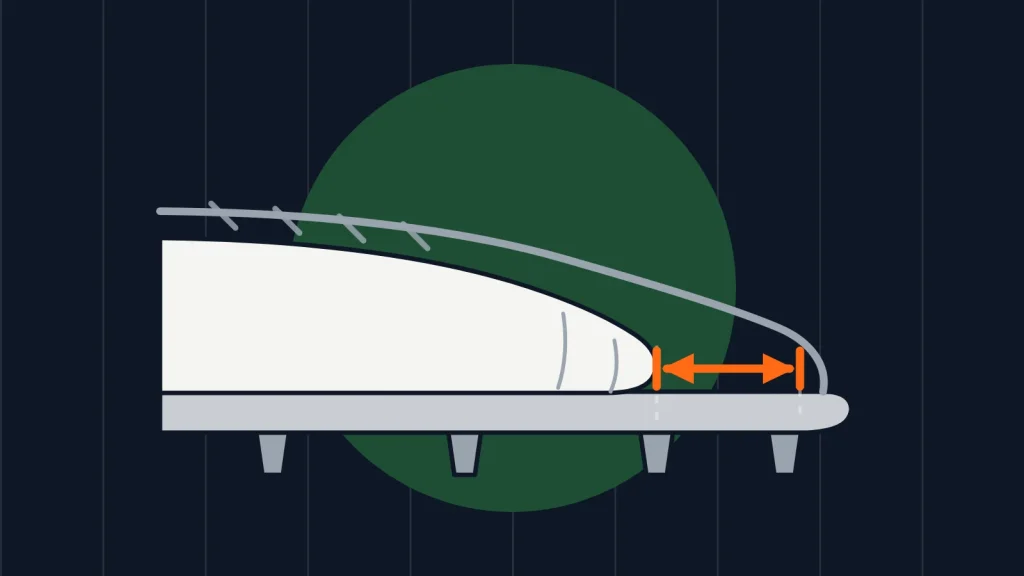
The front margin is the easiest thing to check in a shop: a thumb's width between the longest toe and the end of the shoe, which Under Armour puts at around half an inch. One last step is often skipped: check the fit in match socks, not in everyday socks. The 2026 IFAF rules list socks among the compulsory equipment, where shoes do not appear at all; they belong with the rest of the football apparel.
One label, two foot lengths
This is where online orders go wrong. Both brands publish their charts in inches, and the columns do not quite tell the same story.
| Size | Nike foot length | Under Armour foot length |
|---|---|---|
| EU 42.5 (US 9) | 10 5/16 in, about 26 cm | 10 1/4 in, and 27 in the CM column |
| EU 44 (US 10) | 10 11/16 in, about 27 cm | 10 9/16 in, and 28 in the CM column |
In inches the two brands nearly agree. But within Under Armour's own chart, the centimetre column and the inch column on the same row are about 1 cm apart, even though the brand explains that the heel-to-toe measurement in centimetres is what gets translated into its sizes. For a foot measured at 27 cm that matters: Under Armour's CM column points to a US 9, while Nike's chart places it between US 9 and US 10, so to a US 10 once the size-up rule is applied. A full size of difference.
The practical answer: convert your centimetres into inches and compare inside the chart of the brand you are buying, never across brands. The adidas Adizero Chaos II raises a different problem: no usable adidas size chart could be opened, as the conversion pages return an error to automated requests. That leaves the conversion printed by the retailer, for what it is worth. The same applies to the Nike Alpha Menace Varsity 3: the retailer only lists US sizes, with no Nike conversion chart specific to this model.
Retailer size runs do not match
One model, three shops, three scales. For the Nike Force Savage Pro 2, surveyed on 27 September 2026, one retailer lists EU 44 to 48.5, another UK 9 to 15 and a third US 7 to 18. For the Under Armour Spotlight Mid, one shop offers an EU 51 that does not exist in Under Armour's chart, which stops at EU 50.5.
Detachable cleats are starker still: no manufacturer page could be found for the Under Armour Hammer Mid D. We therefore apply Under Armour's generic men's chart to the size in stock, which gives EU 42.5 for a US 9. Before ordering, ask the retailer for the foot length that matches the size shown: it is the only figure that does not change from one country to the next.
Cut, socks and wide feet
Collar height changes how the shoe holds you, not how long it is. Under Armour describes a high cut "built for a secure feel and strong base at the line", a mid cut with "a balanced feel that works well for positions needing both control and quick movement", and a low cut "built for a lighter feel and fast footwork", aimed at receivers and defensive backs. Choosing between those heights, and between molded cleats and detachable studs, is covered in our guide on how to choose football cleats.
On socks, the Battle Long Football Socks are listed with a textured underfoot design for a better grip inside the cleat, in two adult sizes (S/M and L/XL).
For wide feet, Nike notes that its signature perforated toe is roomier, as on the Nike Vapor Edge 360 Untouchable. The retailer takes the opposite view for the Nike Alpha Menace 3 Shark, recommending it for narrow feet instead. None of the three makers publishes a width measurement: if you have wide feet, trying the shoe on is still the only judge.
FAQ
Should football cleats be the same size as my normal shoes?
Yes. Under Armour's published rule is that cleat size should match your usual shoe size, and only between two sizes should you move up.
How much room should there be in front of the toes?
A thumb's width between the longest toe and the end of the shoe, which Under Armour puts at about half an inch.
When is the best time of day to measure a foot?
Under Armour recommends measuring later in the day, with your full weight on the foot while you trace it.
How do I measure a child's foot?
Nike describes a simpler version: put the paper on the floor against a wall, have the child stand with the heel against the wall, trace both feet and use the longer one.
Sources
- Nike, Men's Footwear Size Chart: https://www.nike.com/size-fit/mens-footwear
- Nike, Kids' Footwear Size Chart: https://www.nike.com/size-fit/kids-footwear
- Under Armour, Men's Footwear Size Guide: https://www.underarmour.com/en-us/t/size-guide/mens-footwear/
- Under Armour, How To Buy The Best Football Cleats: https://www.underarmour.com/en-us/t/playbooks/football/best-football-cleats/
- IFAF, Football Rules and Interpretations 2026 (compulsory equipment, rule 1-4-3): https://amerikanskeidretter.no/wp-content/uploads/2026/02/IFAF-Football-Rules-and-Interpretations-2026-med-norske-tilpasninger.pdf