Shoulder pads
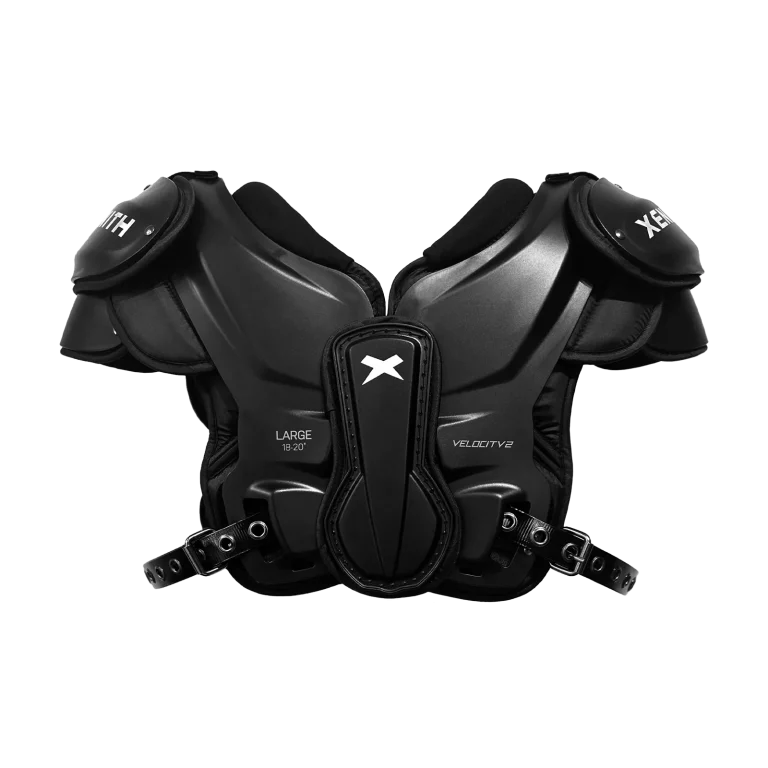
Xenith
Velocity 2 shoulder pads
DB · QB · RB · WR Availability not confirmed
from€279.90
See the product
The wide receiver lines up near the sideline, runs routes, gets open and catches passes from the quarterback. Speed, sharp footwork and reliable hands define the position. His kit follows the same logic: gloves with a tacky palm to secure catches, low-profile skill shoulder pads that let his arms reach up freely, and lightweight cleats that grip well off the line and through cuts. The facemask stays open so he can track the ball in the air. Protective gear, starting with a girdle and a mouthguard, remains essential: a receiver often takes the hardest hits at the very moment of the catch, arms stretched and body exposed. Lightness matters, but never at the expense of basic protection.
A receiver is judged on his ability to get open and then make the catch, often under pressure. Every gram counts, yet protection must not be sacrificed: the heaviest contact frequently comes at the moment the ball arrives.
This is the most position-specific item. Receiver gloves prioritise a very tacky palm and a thin, flexible, breathable back to preserve feel. Palm grip fades with wear and dirt, so care and regular replacement are part of the job. In our catalogue, the Cutters Rev Pro 7.0 and the Grip Boost Stealth 6.0 are receiver gloves.
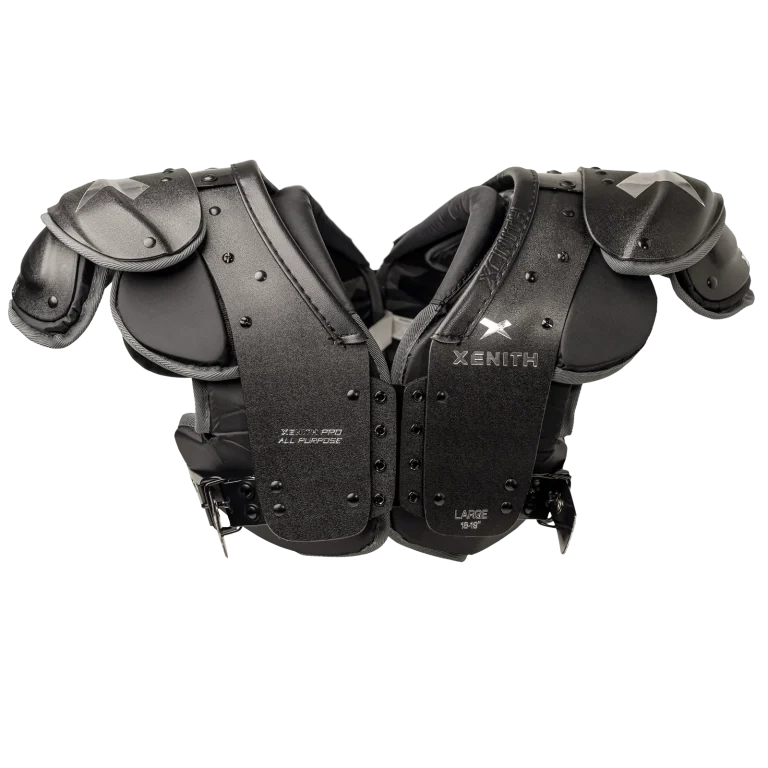
Skill football shoulder pads are designed for this kind of player: a smaller shell, low profile and modest weight, so the arms can go above the head without restriction. The Schutt XV Flux Skill and the Xenith Velocity 2 are listed for receivers.
A receiver needs to follow the ball throughout its flight. Open facemasks with few bars are the most widespread choice at this position. A visor can reduce glare; whether it is allowed, and in what tint, depends on the competition rules.
Receivers look for light football cleats, often low-cut, with a responsive sole for explosive starts and sharp breaks. Whether to go for moulded or detachable studs depends mainly on the surface: artificial turf or natural grass.
Young receivers can find gloves in youth sizes: a hand that swims inside the glove loses exactly the control a receiver is looking for.
A very tacky palm for catching and a thin, flexible, breathable back for feel. It has less padding than a lineman glove, which prioritises protecting the hands.
Follow the manufacturer's care instructions, particularly for cleaning and drying. Grip still fades with wear, so gloves whose palms no longer stick should be replaced.
Low-cut is the most common choice at this position for lightness and freedom of movement. Mid-cut offers more ankle support; the right option depends on the player's feel and injury history.