Shoulder pads
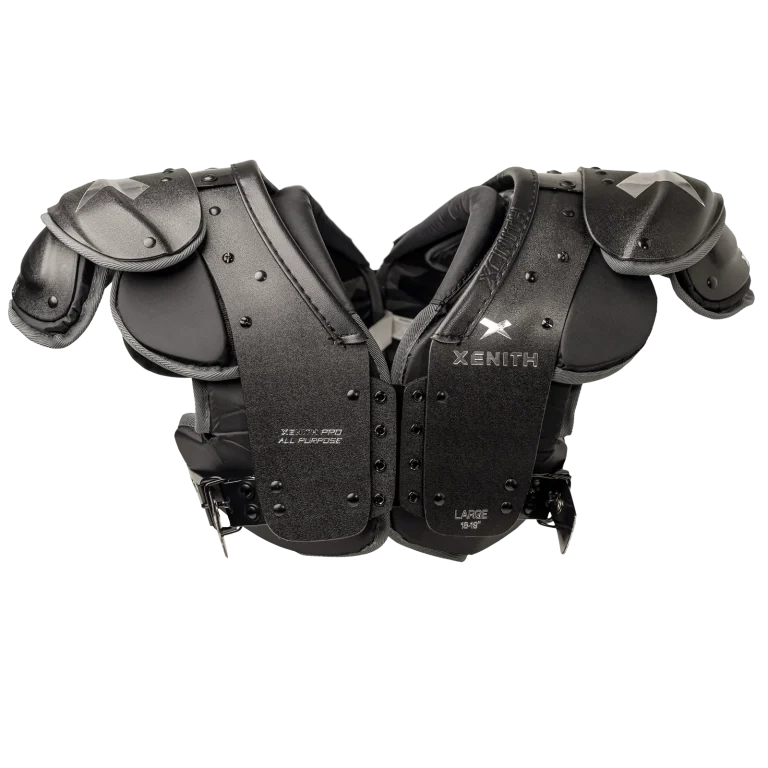
Defensive backs, meaning cornerbacks and safeties, form the last line of the defence. They cover receivers, break up passes and tackle ball carriers who have got past the first two levels. Their game relies on speed, backpedalling and the ability to make interceptions, so their kit looks a lot like a receiver's: light skill shoulder pads that do not restrict the arms, an open facemask to watch both the ball and the opponent, grippy gloves for interceptions, and light cleats with reliable grip through turns. Safeties, who are often more involved in tackling near the line, may look for slightly more protection than cornerbacks. Speed and protection have to be balanced carefully.
Cornerbacks and safeties spend much of each play backpedalling, turning and accelerating to stay with a receiver. They also have to tackle at full speed. Their kit aims for lightness and freedom of movement, bearing in mind that collisions at this position often happen at high speed.
Skill football shoulder pads dominate here: a low profile, reduced weight and a wide range of motion for arms that need to contest the ball. The Schutt XV Flux Skill and the Xenith Velocity 2 in our catalogue are listed for defensive backs. A safety who often plays close to the line may prefer a model with a little more coverage.
A defensive back must see the receiver and the ball at the same time. Open facemasks, similar to those worn by receivers, are common. As at every position, football helmet size and fit come before style.
Defensive backs often wear receiver-style gloves: a tacky palm to hold on to an interception and a thin back to keep feel. Some choose a slightly more reinforced model to cope better with tackling.
The backpedal, hip turns and bursts of speed call for light football cleats, often low-cut, with dependable traction in every direction. Moulded or detachable studs are chosen according to the playing surface.
A cornerback who plays mostly man-to-man coverage can aim for the lightest possible set-up. A safety, who switches between deep coverage and run support, is better off keeping a little extra protection, especially around the torso.
Skill shoulder pads, light and low in profile, which leave the arms free to break up passes. A safety who is often involved in tackles near the line may choose a model with a little more coverage.
Yes, and it is common: the tacky palm helps with interceptions and deflections. Some prefer a slightly more reinforced glove to handle the contact of tackling.
The basics are the same: skill shoulder pads, an open facemask and light cleats. Safeties, who come into contact near the line more often, sometimes look for extra protection such as a rib protector or pads with more coverage.